On April 30 I will have the pleasure of conducting the beautiful and rarely performed Harp Concerto by Alberto Ginastera with a wonderful soloist: Meredith Clark (who plays regularly as guest principal harp with the San Francisco Symphony). I had the opportunity to ask Meredith some questions about her love for her instrument and for Ginastera's music. Below are the answers.
Christian Baldini: Meredith, I am very excited to have you with us for this magnificent harp concerto. People don't get to see the harp featured as our concerto soloist very often, so this is particularly wonderful. Please tell me, why is Ginastera's Harp Concerto such a favorite piece of yours? (I asked you what your favorite concerto was several years ago backstage and you answered immediately "the Ginastera", and I have been planning on doing this piece with you since then!)
Meredith Clark: Thanks so much Christian! The Ginastera Harp Concerto is my favorite because of how lively and powerful you get to be as the performer. It's very rhythmic and dancelike, there's a high drama factor and it's a really amazing piece of music. My whole career, I've heard stereotypes of how angelic the harp is, and how beautiful it is (and don't you wish you played the piccolo?), and this concerto speaks directly to those things. It lets me show off what the harp is capable of, I can be loud, rhythmic, surprising even, and do things that no other instrument is capable of. I love the shock factor, and then it's almost more meaningful to have the more beautiful and intimate moments too.
CB: This concerto, as well as most of the very important ones of the 20th century were commissioned by the same person. Edna Phillips was a maverick, she is the reason why so many great harp concertos exist. She also had a long association with the Philadelphia Orchestra. What can you tell us about this wonderful woman and the trailblazing work she did for the harp and harpists?
MC: Edna Phillips studied with Carlos Salzedo at the Curtis Institute and became the Principal Harpist for the Philadelphia Orchestra in 1930 under Leopold Stokowski. She was both the first woman in that orchestra, and the first woman to be a Principal player in any major American orchestra. She was 23, and had only been playing the harp for 5 years at that point when she auditioned for the job. She retired from the Philadelphia Orchestra in 1946, but continued to commission many concertos, including most famously the Ginastera. She commissioned Ginastera to write it in the late 1950's, and helped with some revisions though ultimately didn't perform the premiere. She was also instrumental in developing music programs in Philadelphia, and had a passion for philanthropy. I'm so grateful for the work she did, and the amazing legacy she's left behind for all of us today.
CB: How were your beginnings with music? Did you start on the piano, the harp, or something else?
MC: I started on piano. My mother is a pianist and organist, and we had a baby grand in the living room. When I was around 4 years old, my mom caught me trying to plunk out the theme song to Sesame Street, and she decided it was time to start lessons. She wisely decided not to teach me and enrolled me in a piano program at TCU. I played the piano happily enough for a few years until my younger brother started Suzuki violin. They had a Christmas concert one year that I went to, highlighting all of the different Suzuki instruments, and at one point there were harps on stage, and I was elbowing my mom telling her THAT is what I wanted to do. Eventually we got in touch with the teacher, rented a harp, and it took off. It was clear that harp was more my thing, and I never looked back!
CB: What are some of the wonderful unique features of the harp? What made you fall in love with it?
MC: Obviously it's a visually impressive instrument. It's large, glamorous, and maybe a bit intimidating. I love that there's a direct physicality of making music with the harp - there's my fingers on the strings, and how I pluck them is what makes the sound. With no bow, reed or mouthpiece necessary, it feels like an extension of myself when I'm playing. There are the mechanically tricky parts too, and having 7 pedals to navigate can be a challenge, but I love how it's a bit like a puzzle. I had a friend once describe sitting in front of harpists in an orchestra like being in front of a stampede of unicorns, and I love that analogy.
CB: You have played under many of today's foremost conductors, including last week performing with the San Francisco Symphony Mahler's 5th Symphony with Gustavo Dudamel. What can you tell us about some of these incredible experiences of working at such a high level? What are some of your favorite recollections?
MC: Wow, I'm still taking last weekend in. Working with Dudamel was incredible, and for it to be on such an iconic piece for the harp was really special. Getting to play other Mahler symphonies with the San Francisco Symphony and MTT was always a treat - one time especially was a bit scary, as I had to play Mahler 10 and 1 with SFS at Carnegie Hall, without rehearsal. Until the night beforehand, I don't think I'd ever even heard Mahler 10! Sometimes you just have to trust your training, study the score, and go out there and make music. One of my favorite memories playing 2nd harp with the San Francisco Symphony was playing Strauss' Alpine Symphony with the recently-retired Principal Harpist Doug Rioth. That week we felt especially in sync, and it was almost as if we were one harpist making one giant sound, perfectly together. Playing unison with another harpist is very challenging, so having that kind of experience and connection is unforgettable! Getting to work with Esa-Pekka Salonen on things ranging from Beethoven to premieres of new works has been amazing, and I'm looking forward to seeing how the orchestra changes under his leadership. It's exciting to be a part of, and to share a commitment to bringing what's on the page to life for the audience. I'm still so grateful that we're back, getting to perform for live audiences. The audience is an integral part of what I feel on stage, and I'm so happy we can share that space again.
CB: Wonderful to have you with us dear Meredith, I can't wait to make music with you and showcase this beautiful and exciting music with our audience!
MC:Thank you so much Christian! I'm honored to be playing this piece with you and Camellia, and can't wait for the audience to hear it!
 |
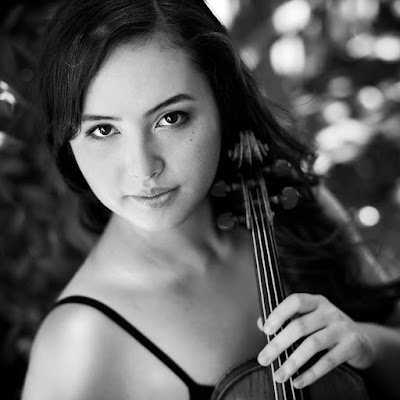
| Meredith Clark (courtesy photo) |
Meredith Clark has established herself as the lead freelance harpist in the San Francisco Bay Area. She currently has the distinction of playing as guest principal harpist of the San Francisco Symphony, and holds positions with the Oakland Symphony and San Francisco Contemporary Music Players. She enjoys working under some of the most sought-after conductors in the world including Esa-Pekka Salonen, Michael Tilson Thomas, Gustavo Dudamel and many others. Meredith enjoys a varied career, having traveled around the world to play solo, chamber and orchestral music. She also can be heard on the soundtracks for many films and video games. During the Pandemic, Meredith co-founded a business called Boundless Musician, where she works with other musicians to help them feel more connected and gain confidence in their musical abilities through work away from the instrument, blending coaching and a more holistic approach. She aims to perform at the highest level while celebrating the fact that we’re all human, and there’s more life and beauty to be found when not attempting to be perfect. Meredith grew up in Fort Worth, Texas and studied under Yolanda Kondonassis at the Oberlin Conservatory and the Cleveland Institute of Music.