Sunday, May 29, 2022

Carrie Hennessey in Conversation with Christian Baldini

On June 4, 2022 I will share the stage with soprano Carrie Hennessey, who has been a frequent collaborator of mine. She will sing arias by Verdi and Dvorak, and duets by Offenbach and Delibes with mezzo-soprano Sarah Fitch. All of this will be with the Camellia Symphony Orchestra in a program that includes Holst's masterpiece The Planets. 

Christian Baldini: Dear Carrie, I am always delighted to work with you and to share your amazing voice and musicality with our audience here in Sacramento. This time we get to do a couple of duets with you and Sarah Fitch, as well as two wonderful arias by Verdi, and one by Dvorak. Tell me, what is special to you about this program, these pieces, this collaboration?

Carrie Hennessey: Well, two of the arias are ones that I performed and advanced in the Metropolitan Opera Auditions, Merce dilette amiche and Rusalka's Song to the Moon. The Dvorak holds a special place in my heart.  I am currently in the process of writing a one woman show about my singing life, the devastating 12 years away from singing and the coming back to it. This aria has its own tender scene in the show retelling the other worldly experience of my very first Met Audition. I also, of course, love singing with my dear friend Sarah Fitch, so the two duets will have me smiling from the inside out!


CB: How were your beginnings with opera? How did it all start for you?

CH: Growing up in MN, we were exposed really early on to choral, symphonic music and opera. My mother accompanied many local choirs and as a small child I was already memorizing all the parts! In high school I sang in the choirs, the musicals, solo competitions, and one year a famous conductor from the MN Bach Society came to our school to coach our school choir. My choir teacher had me sing a little Italian aria for him and he decided I should work on Handel’s “Let the Bright Seraphim” for the next competition. He accompanied me, brought in a professional trumpet player, and needless to say helped me develop some rather flashy ornamentation! The more I learned about opera, I loved the playful, collaborative nature of it all and the depth of the storytelling that was possible. 


CB: Why do you think opera is relevant nowadays? What would you like to convey to people in the audience with your wonderful artistry?

CH: Opera, by its nature, conveys deep emotional content. It’s larger than life and can truly house the tremendously big  emotions we all feel. Opera allows for the force of these emotions to move through us in a way that everyday life doesn’t allow. The release is visceral. The depth and breadth of storytelling in this tradition is vast and needed, especially now. My intent is always to connect first to the text and music, to find the universal truth and to take risks vocally and dramatically in order to serve it as best as I can. I intend to be the vessel for our communal, musical experience that we have been lacking during the pandemic. To feel the shared vibrations in these concert halls is a moving way to connect as humans. 


CB: Do you have any advice for young singers who are starting out? What are some helpful considerations? How does one deal with frustrations, failure, and hard decisions? (we have all gone through those!)

CH: Oh my goodness, do I! Seek advice and support from those who are doing the work, those you admire. Communicate clearly with mentors and teachers when things are getting frustrating and you find your needs are shifting. Only YOU know the kind of career you want, the only path is yours. Seek teachers who encourage you to look outside their studio, to be curious, to have questions. Don’t be afraid to ask, even if it seems like a risk. Artists want to support one another, and often we forget that.  I left singing for over 12 years because I didn’t have the tools to communicate as clearly as I needed, so I am a huge advocate in teaching my young vocal students to truly advocate for what they need, even if they think that the powers that be might shut them down, embarrass them or never hire them again. It is still so important to communicate needs so that we can be vulnerable in this rehearsal and performing space.


CB: Thank you so much Carrie. I very much look forward to our upcoming performance. I know that people will be in for a treat, as is always the case with you!

CH: Thank you, Christian! This will be a full and satisfying program indeed!


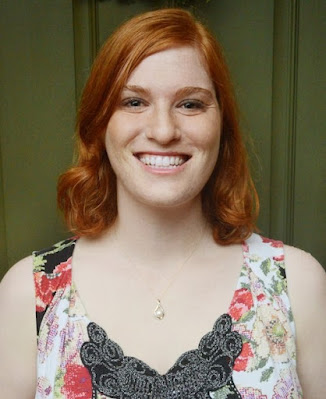
Carrie Hennessey - Photo by @cymberella


Known for her soaring voice and richly nuanced characters, soprano Carrie Hennessey is consistently thrilling audiences and critics in opera and concert appearances around the world. As Kát’á in Kát’á Kabanová,  “in a vivid star turn in the title role...brought a wondrous blend of silvery tone and sinuous phrasing to her assignment...Hennessey’s performance touched perfectly on Katya’s anxiety, joys and uncertainty, all through a surge of Puccinian lyricism.”- Joshua Kosman, San Francisco Chronicle


The 2022/2023 season kicks off with Opera and Interstellar Voices with the Camellia Symphony, the Brahms’ Requiem and Happy Birthday, USA! with the Music in the Mountains Chorus and Orchestra, and appearances with the Bear Valley Music Festival and the Auburn Symphony.


Recent engagements include the title role in Kát’á Kabanová by Leoš Janáček and her illuminating the comic, awkward, and vulnerable Rose in At the Statue of Venus accompanied on piano by composer Jake Heggie. Ms. Hennessey performed the  inaugural season of the Capitol Public Radio Garden Concert Series, as soloist of operatic arias with the Cleveland Philharmonic, the world premiere of Bones of Girls by librettist, Cristina Fríes and composer, Ryan Suleiman, with The Rogue Music Project. “And Yet She Persisted” is a visceral and heartfelt recital with long time collaborator Jennifer Reason of all female composers. Debuting as Estelle in a sold out run of an immersive production in the opera The Stronger was a highlight in the Sacramento restaurant Magpie.  Song of Sacramento , a benefit that also amplified the voices of local composers.


Notable opera highlights include Blanche Du Bois in A Streetcar Named Desire, Sarah Miles in the Bay Area premiere of Jake Heggie’s The End of the Affair and Elle in La Voix Humaine in NYC. Concert highlights include Strauss’ Vier Letzte Lieder, collaborating in the development and performance of a world premiere ballet “On the Rocks, Please!”, “Bernstein 100” with the Colorado Symphony, Britten’s War Requiem, Mahler’s Symphony No. 2 as well as debuts at the Concertgebouw in Bruges, in Ypres, Belgium and at the Liederhalle in Stuttgart, Germany singing the soprano solo in the Verdi Requiem. Alongside the world-renowned composer Ricky Ian Gordon in the fall of 2016, Ms. Hennessey gave Master Classes and performed a recital of his original art songs. 


Hennessey has also performed with the Houston Symphony, at St. Stephen’s Cathedral in Budapest, Reduta Hall in Bratislava, Rudolfinum Hall in Prague, and at the International Mahler Festival in the Czech Republic.


Ms. Hennessey continues to actively support music education through lectures, workshops and Master Classes in the communities in which she works, as well as nurturing a thriving private vocal studio. She is currently in the process of writing a one woman show about her early life in singing, walking away from a singing career for 12 years and coming back to create a unique, versatile and vibrant performing and teaching career. Subscribe to her email list www.carriehennessey.com and follow on social media @carriehennessey for updates in the creative process! 


Wednesday, April 27, 2022

Meredith Clark in Conversation with Christian Baldini

On April 30 I will have the pleasure of conducting the beautiful and rarely performed Harp Concerto by Alberto Ginastera with a wonderful soloist: Meredith Clark (who plays regularly as guest principal harp with the San Francisco Symphony). I had the opportunity to ask Meredith some questions about her love for her instrument and for Ginastera's music. Below are the answers.

Christian Baldini: Meredith, I am very excited to have you with us for this magnificent harp concerto. People don't get to see the harp featured as our concerto soloist very often, so this is particularly wonderful. Please tell me, why is Ginastera's Harp Concerto such a favorite piece of yours? (I asked you what your favorite concerto was several years ago backstage and you answered immediately "the Ginastera", and I have been planning on doing this piece with you since then!)

Meredith Clark: Thanks so much Christian! The Ginastera Harp Concerto is my favorite because of how lively and powerful you get to be as the performer. It's very rhythmic and dancelike, there's a high drama factor and it's a really amazing piece of music. My whole career, I've heard stereotypes of how angelic the harp is, and how beautiful it is (and don't you wish you played the piccolo?), and this concerto speaks directly to those things. It lets me show off what the harp is capable of, I can be loud, rhythmic, surprising even, and do things that no other instrument is capable of. I love the shock factor, and then it's almost more meaningful to have the more beautiful and intimate moments too. 

CB: This concerto, as well as most of the very important ones of the 20th century were commissioned by the same person. Edna Phillips was a maverick, she is the reason why so many great harp concertos exist. She also had a long association with the Philadelphia Orchestra. What can you tell us about this wonderful woman and the trailblazing work she did for the harp and harpists?

MC: Edna Phillips studied with Carlos Salzedo at the Curtis Institute and became the Principal Harpist for the Philadelphia Orchestra in 1930 under Leopold Stokowski. She was both the first woman in that orchestra, and the first woman to be a Principal player in any major American orchestra. She was 23, and had only been playing the harp for 5 years at that point when she auditioned for the job. She retired from the Philadelphia Orchestra in 1946, but continued to commission many concertos, including most famously the Ginastera. She commissioned Ginastera to write it in the late 1950's, and helped with some revisions though ultimately didn't perform the premiere. She was also instrumental in developing music programs in Philadelphia, and had a passion for philanthropy. I'm so grateful for the work she did, and the amazing legacy she's left behind for all of us today.

CB: How were your beginnings with music? Did you start on the piano, the harp, or something else?

MC: I started on piano. My mother is a pianist and organist, and we had a baby grand in the living room. When I was around 4 years old, my mom caught me trying to plunk out the theme song to Sesame Street, and she decided it was time to start lessons. She wisely decided not to teach me and enrolled me in a piano program at TCU. I played the piano happily enough for a few years until my younger brother started Suzuki violin. They had a Christmas concert one year that I went to, highlighting all of the different Suzuki instruments, and at one point there were harps on stage, and I was elbowing my mom telling her THAT is what I wanted to do. Eventually we got in touch with the teacher, rented a harp, and it took off. It was clear that harp was more my thing, and I never looked back!

CB: What are some of the wonderful unique features of the harp? What made you fall in love with it?

MC: Obviously it's a visually impressive instrument. It's large, glamorous, and maybe a bit intimidating. I love that there's a direct physicality of making music with the harp - there's my fingers on the strings, and how I pluck them is what makes the sound. With no bow, reed or mouthpiece necessary, it feels like an extension of myself when I'm playing. There are the mechanically tricky parts too, and having 7 pedals to navigate can be a challenge, but I love how it's a bit like a puzzle. I had a friend once describe sitting in front of harpists in an orchestra like being in front of a stampede of unicorns, and I love that analogy. 

CB: You have played under many of today's foremost conductors, including last week performing with the San Francisco Symphony Mahler's 5th Symphony with Gustavo Dudamel. What can you tell us about some of these incredible experiences of working at such a high level? What are some of your favorite recollections?

MC: Wow, I'm still taking last weekend in. Working with Dudamel was incredible, and for it to be on such an iconic piece for the harp was really special. Getting to play other Mahler symphonies with the San Francisco Symphony and MTT was always a treat - one time especially was a bit scary, as I had to play Mahler 10 and 1 with SFS at Carnegie Hall, without rehearsal. Until the night beforehand, I don't think I'd ever even heard Mahler 10! Sometimes you just have to trust your training, study the score, and go out there and make music. One of my favorite memories playing 2nd harp with the San Francisco Symphony was playing Strauss' Alpine Symphony with the recently-retired Principal Harpist Doug Rioth. That week we felt especially in sync, and it was almost as if we were one harpist making one giant sound, perfectly together. Playing unison with another harpist is very challenging, so having that kind of experience and connection is unforgettable! Getting to work with Esa-Pekka Salonen on things ranging from Beethoven to premieres of new works has been amazing, and I'm looking forward to seeing how the orchestra changes under his leadership. It's exciting to be a part of, and to share a commitment to bringing what's on the page to life for the audience. I'm still so grateful that we're back, getting to perform for live audiences. The audience is an integral part of what I feel on stage, and I'm so happy we can share that space again.

CB: Wonderful to have you with us dear Meredith, I can't wait to make music with you and showcase this beautiful and exciting music with our audience!

MC:Thank you so much Christian! I'm honored to be playing this piece with you and Camellia, and can't wait for the audience to hear it! 

Meredith Clark (courtesy photo)


Meredith Clark has established herself as the lead freelance harpist in the San Francisco Bay Area. She currently has the distinction of playing as guest principal harpist of the San Francisco Symphony, and holds positions with the Oakland Symphony and San Francisco Contemporary Music Players. She enjoys working under some of the most sought-after conductors in the world including Esa-Pekka Salonen, Michael Tilson Thomas, Gustavo Dudamel and many others. Meredith enjoys a varied career, having traveled around the world to play solo, chamber and orchestral music. She also can be heard on the soundtracks for many films and video games. During the Pandemic, Meredith co-founded a business called Boundless Musician, where she works with other musicians to help them feel more connected and gain confidence in their musical abilities through work away from the instrument, blending coaching and a more holistic approach. She aims to perform at the highest level while celebrating the fact that we’re all human, and there’s more life and beauty to be found when not attempting to be perfect. Meredith grew up in Fort Worth, Texas and studied under Yolanda Kondonassis at the Oberlin Conservatory and the Cleveland Institute of Music. 


Tuesday, February 15, 2022

Amos Yang in Conversation with Christian Baldini

Christian Baldini: On February 19 I will have the pleasure of welcoming one of the most outstanding cellists in the US to play Prokofiev's Symphony Concerto Op. 125 as our soloist with the Camellia Symphony Orchestra in Sacramento. Amos is the assistant principal cello with the San Francisco Symphony, and has had a long and extremely successful career collaborating with some of the most important musicians of our time. Amos, can you start by sharing with us why this piece by Prokofiev is so important to you? And why do you think it is so rarely performed?


Amos Yang: It’s a tour de force for everyone on stage which I think makes it so much fun. The challenge for the orchestra is to balance the fine line between chamber music and full symphonic tuttis. For me, the scope of it is something I’ve always been in awe of and is a bit like Alex Harold climbing El Capitan free solo. The sheer forces and complexity of the piece are challenging but more and more people are playing this piece as our collective technique improves.

CB: Please tell us about your background. Do you come from a musical household? How did you get started with music? When did you decide/realize you would make this commitment of becoming a professional musician?


AY: My parents aren’t musicians but they LOVE music and wanted to share that love with all of their children. I started at the SF Conservatory of Music under the tutelage of Irene Sharp. She was an amazing teacher and dedicated to all of us reaching our full potential. It wasn’t until my junior/senior year in high school though that I made the decision to make a go of it as a musician.

CB: As a cellist, chamber musician and member of one of the greatest orchestras in the world, what/who would you say have been the most inspiring experiences in your life?

 
AY: My colleagues inspire me daily with the level of playing they achieve. Touring the world with the orchestra is inspiring in and of itself. I love playing in different concert halls in different cities. It gives you perspective when you return home and while tours are brief, you get a feel for many new places and people.

CB: Who have been your most important mentors, and why?


AY: As a cellist Irene Sharp helped mold me from the age of 5. I became a cellistic mutt after that and owe a great deal to all my professors. Channing Robbins, Joyce Robbins, Paul Katz, Steve Doane and Joel Krosnick to name a few. Channing helped organize me, Joyce guided me as only a violinist could, Paul helped me greatly with sound, Steve inspired with his playing and Joel showed me what a true understanding of musical intent can convey.

CB: Why would you say performing music is important? What does it bring or add to our everyday lives? What is its role in society?


AY: It is a cliche but music really is a language without borders. It can bridge racial, cultural, social and monetary differences. Unlike languages that are usually organized with borders, music flows easily without these limitations. Because there aren’t words in much of music, the same music means something different to all who hear it. Yet, we perceive harmonies and melodies in a similar uniquely human way.

CB: What would be your advice for young musicians? What was helpful to you? How do they stay motivated, on track, and always in a growth mindset?


AY: For all young musicians I’d advise you to learn how to sing. Singing a phrase is by far the easiest and most natural way to figure out how you should shape an idea of music. Motivation is different from person to person. If you are like me, it helps to have a carrot for motivation. For me that meant competitions, auditions etc…For others that might be scheduling performances as goals.  It’s hard to stay motivated if one doesn’t have an audience to play for and share our music with.

CB: Lastly: what are three or four things that people should listen for in the Prokofiev Symphony Concerto? What would you say to someone who has never listened to a work by Prokofiev?


AY: Enjoy the banter between the soloist and the orchestra. Listen for dialogue as you might in a movie.

CB: Thank you very much for your time Amos. I very much look forward to our performance on February 19!


AY: Thank you I’m looking forward to it as well!


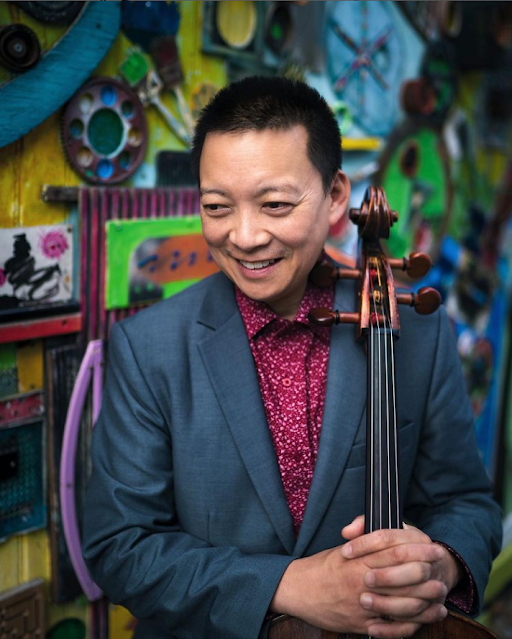
Watching San Francisco Symphony Assistant Principal Cello Amos Yang onstage, you’d never guess that his introduction to the cello was anything less than love at first sight. “My mother and I were going to sign up for violin lessons when we bumped into a family friend whose daughter had just auditioned for a wonderful new cello teacher,” he says. “My mom asked me if I wanted to try the cello, I shrugged my shoulders indifferently and off we went to the audition. It turns out the audition consisted of ‘bear hugging’ a tiny cello. As soon as I did that I was accepted into the studio and here I am forty plus years later still playing and hugging my cello most mornings.”

Amos’s is a uniquely San Francisco story. He studied with Irene Sharp at the San Francisco Conservatory and played with the SFS Youth Orchestra in its early days. “I was a bit of a challenge as an easily distracted eleven-year-old, but I'm glad they stuck with me. It was a terrific experience and training ground.” Amos’s studies weren’t limited to orchestral playing, however. “The San Francisco Boys Chorus also helped develop my physical and musical voice. I am constantly encouraging my students to sing and most of them are too embarrassed and inhibited to do this. If you can sing it you can play it!”

He went on to earn degrees from the Juilliard School before landing a post with the Seattle Symphony and performing as a member of the Maia String Quartet. Winning a position with the SFS in 2006 offered a rare and prized opportunity to join his hometown orchestra.

Amos’s return to the Bay Area continued the circle in more than one way. His son, Noah, also studies cello with Irene Sharp, while Amos teaches at the San Francisco Conservatory. He and his wife, violinist Alicia, are also parents to a daughter, Isabel, a budding violinist who sings in the San Francisco Girls Chorus.

The enormity of being part of the orchestra he listened to as a child isn’t lost on Amos. “Anytime we set foot in or draw the bow across the strings in a place like the Concertgebouw or the Musikverein, it's like a baseball player playing a game in Yankee Stadium or for a basketball player, the Boston Garden. It's a blessing and a privilege to share music with audiences in these settings.”

Monday, November 1, 2021

Composer Profile: Laura Schwartz in Conversation with Christian Baldini

On November 6th 2021, I will conduct the Camellia Symphony Orchestra in Sacramento in a program that includes the world première of Laura Schwartz' work "Figment". Below is a brief interview with this very talented young composer. 

Christian Baldini: Laura, it will be a pleasure to conduct the world premiere of your new piece "Figment", which you wrote for the Camellia Symphony Orchestra. Tell me, how did you approach writing this piece? In your program notes you affirm that "During this piece you hear the bones of an acoustic x-ray." Could you develop further on this very intriguing idea? 

Laura Schwartz: In my process of writing Figment, I chose a few string techniques that already have a tendency towards “noisiness”. I write music that enhances the noise elements of sounds. Examples of compositional techniques I used in Figment that have noise as an integral part of their structure are the sound of the bow hairs striking the stings, the sound a very high note that gently wavers as the player changes their bow position, and the sound of a bow bouncing in a controlled an uncontrolled manner against the strings of an instrument. I consider noise to be the bones of a sound. Noise gives a listener an awareness of space and place, as the noisiness of the piece intermingles with the noisiness (mechanical hums, fans, or wind) of a performance venue. 

CB: What are some of the things you care about the most when it comes to music (both new and old)? 

 LS: In my music composition, form is a primary way I think about my taste in music. As a composer, I care about creating a piece that teaches the audience its internal logic and boundaries. It creates a sonic environment that becomes apparent through listening. For me, it is okay if the technical nuances or musical references are lost in the first or second listen. If the form is communicated, such that a sense of expectation and subversion of expectation is generated, then it is something I find musically attractive. For instance, Haydn’s String Quartet in Eb “the Joke” and Kate Soper’s “Only the Words Themselves Mean What They Say” are examples that capture this characteristic for me. 

CB: You studied at UC Davis (that's how we met, when you were still an undergraduate student), and you've developed a remarkable career already. Can you tell us about some of the most important or inspiring experiences and/or people that you've had so far? What has helped you or inspired you to continue growing and excelling as an artist? 

LS: At UC Davis, the support I had from my friends Cindy, Liz, and Kristina inspired me to continue in music. All three of them, who were not music majors, would go with me to experience the Empyrean Ensemble concerts (the new music ensemble at Davis). It became known as going to see the “weird music” with Laura. It helped me understand how a general audiences can view contemporary music, what could be picked up easily in a piece, and what would be lost. For me, learning how they listened shaped the “who” in the audience I write my music for. I strive to write music that captivates non-music specialists. In my music career, the support from my family has been immense. My mother is probably the person next to myself that has heard most of my pieces live. She is not a trained musician. She is a lover of music. Having one person who is always on my team and who is willing to take notes during a performance so that she can try to understand the conceptual nature of the piece better is a wonderful blessing. I excel because I am part of a network of support. 

CB: What would you recommend to someone who doesn't know your music yet. How should they approach it? Is there anything in particular that they should listen for? 

LS: For someone who does not know my music yet, I would recommend a short exercise. You will need your favorite piece of music, speakers, and an electric fan. Play the music while the electric fan is running. The interplay between the fan noise, the wind, and your music is what I write as my music. In approaching my music, I think of it like a logic puzzle or a mystery novel. An intriguing concept is introduced at the beginning of a piece. It is both deadly serious and mischievously lighthearted. The mystery is explored and elaborated on as clues during instrument dialogues are hinted at. How do the parts fit, blend, or contrast? Are all questions that I answer throughout the piece. I would recommend listening to the instrumental dialogues and how silence is shaded through noise. 

CB: To end this brief interview, I'd like to ask you to dream of a music festival for which you'd be the artistic director. What would you program? Which guests would you invite? Which orchestras and/or ensembles would be featured? (to make it even more difficult: you'd have unlimited funds!) 

 LS: The experience that I enjoy the most from creating music festivals is creating an immersive experience for an audience. At my dream festival, I would create a 8-week site specific event in collaboration with a local marching band, a video projection studio, and an octet that was a combined saxophone quartet and percussion quartet. I would commission four composers and four video artists to create music for this open air project. Bi-monthly would be a new premiere in the same space. As an artistic director, I strive to create scenarios that pose compositional conundrums that bridge artistic disciplines. 

CB: Thank you for your time, we look forward to performing your music! 

LS: Thank you to Christian Baldini and the musicians of the Camellia Symphony for the opportunity to write a new work for your ensemble. I look forward to listening to it.

Laura Schwartz (Photo by Natalia Banaszczy)


Laura Schwartz is composer and video projectionist. Her music explores written notation as a
facilitator of a performer’s own creativity and self-formation. She blends elements of
traditionally notation scores, verbally notated scores, and illuminated manuscripts situating the
participant in a space of their own curiosity and creativity. Schwartz uses cellphones, combs, and
cut flowers to highlight everyday technologies as shapers of our lived sound environments. She
performs guided improvisations on amplified electric fans and graphing calculators.

For more information visit www.lauraroseschwartz.com


Thursday, October 28, 2021

Alina Kobialka in Conversation with Christian Baldini

On November 6th, 2021 I will have the pleasure of conducting the Camellia Symphony Orchestra in the rarely performed Violin Concerto by Carl Nielsen with a wonderful soloist that I've known for many years, and with whom I've collaborated several times. Alina Kobialka comes from a distinguished musicians' family, in fact both of her parents were (her mother still is) key members of the San Francisco Symphony, an orchestra with which Alina made her solo debut at age 14, for their 100th anniversary. 

Christian Baldini: Dear Alina, it will be such a treat to collaborate with you once again. I remember fondly our previous performances with you as our soloist, whether it was the Sibelius, the Beethoven, or the Waxman Fantasy, you always bring so much to the table, so much commitment and talent, and it is always very beautiful to work with you. Tell me, how are you feeling about this upcoming concert, and what can you share with people about the Nielsen Violin Concerto? What makes it so special, and why do you think it is so rarely performed?

Alina Kobialka: I am incredibly excited for this upcoming concert and the opportunity to play with you and the Camellia Symphony again, especially with such a special concerto! I have the best memories of collaborating with you, and all those performances we did together really helped me grow and develop into the musician I am today.


The Nielsen concerto has two movements, with both consisting of a slower beginning leading into a faster section. In addition, he was quite particular about the concerto being virtuosic and dazzling without turning superficial. This turned out to be a challenge that he struggled with for quite some time, but I believe he ultimately succeeded in fulfilling his goal. 


Although the concerto is greatly loved by many musicians, it is rarely performed, as you mentioned. I believe a reason for this is because Nielsen’s music takes time to digest with all its harmonic twists and turns. A passage can seem to be going one way but then he writes something that goes a completely unexpected way. Part of the fun of his music is the more you listen to it, the more you discover. This takes time but is extremely rewarding. 


CB: You come from a very musical household, so this question might be pretty straightforward to you. As a violinist, what/who would you say have been the most inspiring experiences in your life? When did you decide/realize you would make this commitment of becoming a professional violinist? 


AK: I am very grateful to my teacher Ilya Kaler for being an inspiring and influential figure in my musical growth, as well as my former teachers Robert Lipsett, Danielle Belen, Wei He, and Li Lin.


In terms of inspiring musical experiences, I would say joining the San Francisco Symphony Youth Orchestra really fostered my love for classical music and ultimately led to me deciding to become a professional musician. It was so special for me to play great music with wonderful and inspiring peers every Saturday. We were also so lucky to be coached by San Francisco Symphony musicians and meet incredible guest artists that would be in town playing with the SFS. Even a decade later, I often fondly reminisce that special time in my life. 


CB: Can you recall two or three examples of people that you've loved working with, and why?


AK: First and foremost, I had such an incredible time working with conductor Michael Tilson Thomas. His support and guidance were so inspirational, and I often find myself thinking of his advice during my practice sessions. 


During my time at the Marlboro Music Festival, I had the immense honor of working with pianist Mitsuko Uchida. I looked so forward to every rehearsal, as she would have fun anecdotes and was such a sincere and joyful person to work with. She truly puts the music first and foremost, and I find that so inspirational. 


Finally, I had an amazing time working with violinist Vadim Gluzman. Not only is he a fantastic musician, but he is also immensely kind and quite hilarious! We performed a double concerto together, and I felt that he really brought out the best in my playing. Working with these three incredible artists has been so influential for my musical growth and development. 


CB: Why would you say performing music is important? What does it bring or add to our everyday lives?


AK: Music is such a wonderful and essential form of expression. We encounter it all the time, whether it be at concerts, in movies, or even in the elevator. It can touch people in wonderful and mysterious ways, and it adds so much value and color to our everyday lives. For myself, I find it immensely therapeutic and grounding to take my violin out of my case and play, rain or shine. 


CB: What would be your advice for young musicians? What was helpful to you? How do they stay motivated, on track, and always in a growth mindset?


AK: I would say to be critical but also remember that we are only human. Self-compassion is an important skill to have, both with music and life in general. Mistakes are inevitable, and sometimes they will be the most valuable experiences we draw on. 


I would also say play for and collaborate with other musicians when possible, attend concerts and masterclasses, and most importantly, enjoy the ride. Even if this doesn’t end up being your profession, learning music can really change a person’s life for the better.


CB: Lastly: what are three or four things that people should listen for in the Nielsen Violin Concerto? What would you say to someone who has never listened to a work by Nielsen?


AK: In the Nielsen concerto, be ready for some fun harmonic twists and turns! In addition, he wrote this with a Neoclassical melodic structure, so see if there are any melodic lines that you can grab onto and listen for in future sections. For someone who has never listened to a work by Nielsen, I would say the elements I mentioned above also apply. Many of his works contain unusual tonal structures, and it is always quite an interesting journey for both the listener and performer. 


CB: Thank you very much for your time Alina. I very much look forward to our performance on November 6!


AK: Thank you so much, Christian! I can’t wait!


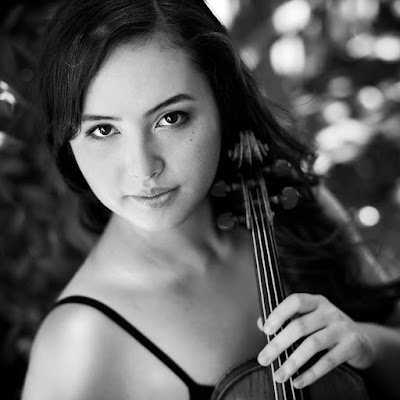
Alina Kobialka (courtesy photo)


Alina Kobialka has been praised as a remarkable violinist due to her beautiful
tone, effortless precision, and musical maturity beyond her years. After her first guest
solo appearance with orchestra at the age of ten, she has toured and performed with many
ensembles throughout the world. The San Francisco Classical Voice described her as a
“jaw-droppingly assured” soloist, who “made present and future converge.” The Las
Vegas Review Journal wrote, “Watch for her name. She appears to be bound for
greatness.”

Alina began her studies at the age of five with Li Lin. She continued on to the
San Francisco Conservatory Preparatory Program, where she studied with Wei He.
Leaving San Francisco at age 16, she attended the Colburn Music Academy in Los
Angeles, where she studied with Robert Lipsett and Danielle Belen. Most recently, Alina
graduated from the Cleveland Institute of Music with her Master’s in Violin
Performance, under the tutelage of Ilya Kaler.

At age 14, Miss Kobialka made her solo debut with the San Francisco Symphony
at their 100th Anniversary Reunion Concert in Davies Symphony Hall, where she has
since returned three times as a soloist. Soon after, she was featured live on the nationally
acclaimed radio show NPR’s From the Top. Since then, Alina has performed with
various American orchestras, including the Las Vegas Philharmonic, ProMusica
Chamber Orchestra, California Symphony, the Colburn Academy Virtuosi Orchestra, and
others.

In 2015, Miss Kobialka made her performance debut in Asia with the Macau
Youth Symphony for their New Years’ Concert. She returned in 2016 to tour Japan with
the Kagawa International Youth Orchestra, and in 2017 to perform in the Shanghai
International Arts Festival gala concert.

Alina was awarded second prize as the youngest competitor of the 2017 Elmar
Oliveira International Violin Competition. Other competition accolades include being a
laureate of the 2016 Irving M. Klein International Competition and receiving the Grand
Prize at the Mondavi Center National Young Artists Competition.

Recent concert highlights include performing with world-renowned conductor
Michael Tilson Thomas and the San Francisco Symphony and making her debut with
Vadim Gluzman and the ProMusica Chamber Orchestra. She also performed a guest
artist recital at Southwestern University in Texas and Brahms Double Concerto for Violin
and Cello with the California Symphony.

An avid chamber musician, Alina has been an artist at the Marlboro Music
Festival for the last few years. This past summer, she had the great honor of performing
with acclaimed pianist Mitsuko Uchida. Other celebrated musicians she has worked with
include pianist Jonathan Biss, violist Kim Kashkashian, cellist Peter Wiley, and violinist
Scott St. John. Future concerts include embarking on a Marlboro National Tour and
returning to the Marlboro Music Festival next summer.


Monday, February 17, 2020

Roger Xia in Conversation with Christian Baldini

Pianist and violinist Roger Xia will be our soloist for Clara Schumann's Piano Concerto on Saturday, February 22 with the Camellia Symphony Orchestra in Sacramento. I had the opportunity of asking Roger some questions, and below are the answers.

Christian Baldini: Roger, it is a pleasure to welcome you back once again with the Camellia Symphony Orchestra. Some years ago, you were our featured "Rising Star", performing concertos on both the violin and the piano. It is so nice to see how much you have developed since those days, and what a mature musician you have become already. Please tell us, what is special to you about performing in the Sacramento and Davis region, where you grew up?

Roger Xia: The Sacramento/Davis region is where I feel most at home and I always love performing for friends and family. I frequently reconnect with old friends, both musicians and non-musicians, at my performances and it’s a joy to catch up with them about our busy lives and future plans. Most of all, I absolutely enjoy inspiring younger children to play classical music, just as I had been inspired and supported by the community.

CB: Tell us about the Clara Schumann Piano Concerto. What is inspiring to you about her? What are some of the features and musical elements that you like the most about this concerto, and what should people listen for while you play it?

RX: For me, the most inspiring element of Clara Schumann’s Piano Concerto is her boldness in incorporating a variety of styles. Some lyrical passages resemble Chopin, while other feisty, technical passages remind me of Liszt. I also like the attacca between the 3 movements of the concerto; the continuation gives the piece a nice flow and creates an unfolding storyline. I hope the audience will enjoy the affirmative and lyrical solo lines in the first movement, the intimate duet with the cello in the second, and the improvisatory, gypsy-like flair in the last movement.

CB: At your young age you've already collaborated with and worked with many wonderful musicians and teachers. Are there any experiences or people that have been particularly inspiring to you?

RX: I’m very fortunate to have started piano lessons with Linda Beaulieu when I was five, and to have continued to study with Dr. Natsuki Fukasawa and professor Richard Cionco for ten years. I’m also grateful to Dong Ho for starting me off on violin when I was six and William Barbini for teaching me during the past seven years. I’d also like to thank Maryll Goldsmith and Michael Neumann for their guidance when I was in the Sacramento Youth Symphony. Many thanks to teachers and staff members at the San Francisco Symphony Youth Orchestra and San Francisco Conservatory of Music Pre-College for continuously helping me develop my artistic potential. I’m also very thankful to Susan Lamb Cook’s continued support in my chamber music learning, Angelo Moreno at my school orchestra coaching. All of these mentors and supporters have inspired me to pursue my lifetime music-making journey.

CB: Why is art important? What is the role of music (and specifically, classical music) in today's world?

RX: Art is something that is unique to humans; it cannot be replaced by robots or AI. It is the most direct expression of the human soul, incorporating kindness, pain, tenderness, ecstasy, and more endless emotions. Music serves as a universal language, an outlet for all these kinds of emotions. As the only audible art form without words, music helps to connect people across the globe with all sorts of backgrounds and portray relatable experiences. Classical music is very unique in the way that it developed alongside music theory and incorporates sophisticated forms like symphonies and operas.

CB: Please tell us about your plans, dreams and wishes for your future. You have managed to continue your remarkable development on both the violin and the piano. What other passions do you have? And now that you will soon embark on your college career, what would you like to do?

RX: In addition to violin and piano, I really enjoy playing tennis and practicing Kung-Fu. moving my body around and breaking a sweat is also a great way for me to clear my mind and serves as a nice break from the academic and musical grind. Every winter, I also go to Lake Tahoe to ski as a mini-vacation with friends and family.
In college, I plan to continue playing piano and violin and participate in chamber music and orchestra ensembles. I’m also really interested in science and would like to simultaneously study academics at a university. Ultimately, I hope to combine music with science to help others.

CB: Thank you so much for your time, and we wish you all the best in your future, which will undoubtedly be remarkable. We look forward to sharing your astonishing talent with our audience very soon.


RX: Thank you Maestro Baldini and the Camellia Symphony Orchestra for inviting me back, and I’m looking forward to another great collaboration and performance!

Roger Xia, Photo by Carlin Ma

Roger Xia, Photo by Carlin Ma


Roger Xia, age 17, a senior at Davis Senior High School (DSHS), is also a San Francisco Conservatory of Music (SFCM) Pre-College scholarship student.                                                                                                                                  

         Roger started piano studies at age 5 with Ms. Linda Beaulieu and continues with Dr. Natsuki Fukasawa and Professor Richard Cionco.  He took violin lessons at age 7 with Mr. Dong Ho and continues with Mr. William Barbini.  At age 10, Roger made his Carnegie Hall debuts as first prize winner of the American Fine Arts Festival (AFAF) Golden Era of Romantic Music International Competition and the American Protégé International Music Talent Competition.  He won top prizes in Pacific Musical Society (PMS), Music Teacher Association of California (MTAC), United States Open Music Competition (USOMC), CMTANC/USIMC International Youth Music Competition, Diablo Valley College Competition (DVC), Sylvia Ghiglieri Piano Competition, and Classical Masters Music Competition, etc.  As the youngest participant in all three age groups, Roger was awarded the memorial scholarships sponsored by the MTAC Sacramento branch (2010, 2014, and 2017).  He also performed at the Junior Bach Festival, Bear Valley Music Festival, Orfeo International Music Festival, InterHarmony International Music Festival, and joined the National Youth Orchestra (NYO-USA) in the summer of 2019.  Roger won the 2015 Mondavi Young Artist Competition Pianist and Bouchaine Young Artists Prizes and was featured on the 2016 From the Top show 322.  He is also the National Young Arts Foundation merit award winner (2018) and honorable mention winner (2020) of Classical Music.  Roger played as a soloist with the Merced Symphony Orchestra (2010), Sacramento Youth Symphony (SYS) Premier Orchestra and Central Valley Youth Symphony (CVYS) Orchestra (2014), UCD Symphony Orchestra (2016), as well as the Palo Alto Philharmonic and Camellia Symphony Orchestra (2017). He was the winner of the DSHS Concerto Competition in 2018 and performed as a violin soloist with the DSHS Symphony Orchestra at Carnegie Hall in the summer of 2018. Roger is also the winner of the 2019 San Francisco Symphony Youth Orchestra (SFSYO) Concerto Competition and played as a piano soloist at Davies Symphony Hall with the orchestra in the fall of 2019.
         Roger has also been studying chamber music with Susan Lamb Cook, William Barbini, Natsuki Fukasawa, Aenea Keyes, Doris Fukawa, Gwendolyn Mok, Temirzhan Yerzhanov, and Angelo Moreno.  He is a violinist and founding member of the SFCM Pre-College Division ensemble Locke Quartet, which won second prize in the 2019 ENKOR competition.  Roger has also attended the prestigious Boston University Tanglewood Institute (BUTI) Summer String Quartet Workshop in 2017.  His chamber music groups in the Davis-Sacramento area won top places at USOMC (2013), Classical Masters Music Festival (2013), and VOCE competition of MTAC (2013 and 2015).  These groups have been frequently invited to perform at senior residences in the Sacramento and Davis area.  Roger has been the concertmaster of SFSYO for the past three seasons and the Europe Performance Tour in the summer of 2019.  He is the current concertmaster of the DSHS Symphony Orchestra.  He was also the concertmaster of the Holmes Junior High (HJH) Orchestra (2014-2017), the California Orchestra Directors Association (CODA) Honor Symphony Orchestra (Nov. 2016), and the SYS Premier Orchestra (2013-2015) and Classic Orchestra (2010-2011).
         Aside from music, Roger enjoys science, math, reading, and movies.  He also likes swimming, skiing, and Kung-Fu, as well as playing tennis, Ping Pong, and soccer.  Most of all, he loves sharing music-making experiences with friends in the community.