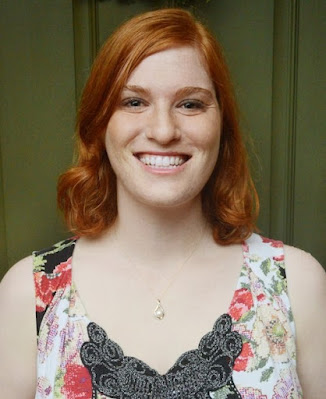
Showing posts with label Composition. Show all posts

Tuesday, February 14, 2023

Trey Makler in Conversation with Christian Baldini

Christian Baldini: I am thrilled that young composer Trey Makler has written a new work that we will perform with the Camellia Symphony Orchestra in Sacramento, in a program that includes Shostakovich's Symphony No. 6 and Korngold's Violin Concerto with Kinga Augustyn. Working closely with a composer on a world première is always a very exhilarating experience. In this case, we have had the luxury of having Trey in several rehearsals, which was very helpful for a work of the nature of "false starts, missed connections", in which Trey has orchestra members inhabit quite a different world from what they are usually asked to do in more 'traditional' settings. Trey, in this work you ask orchestra members to sing, play in unsynchronized ways, and you also make unusual and beautiful requests with regards to character and/or sound production, such as "flickering", "stutters", "a mobile with many parts", etc. Please tell us, what is behind this work? How did you come up with these beautiful and very free ideas?


Trey Makler: Thanks, Christian. It's been an exciting journey working through this piece with everyone. I commend the orchestra on all of their efforts, especially with the new techniques! In many ways, this work was made as a joke with myself. I've been writing quite a bit of music over the past year, and this is actually the second piece for orchestra during that time. Writing for orchestra is daunting—there are so many moving parts, and I feel it's really important to try and give every player something interesting to do so that everyone can feel that their role is valuable in bringing the music to life. This final version of false starts, missed connections is actually my fifth or sixth attempt at the piece, so pushing through my initial block became the impetus for the entire piece: gestures will burn bright and quickly die out, or players will have quasi-unisons that never seem to align. All of my decisions were channeled into writing a piece about how hard it is to write a piece, and finding some joy and playfulness in that situation. 
     As for some of the techniques and free gestures, I go back and forth between writing fixed and free music. I have only ever written really tight, heavily notated music for orchestra, but my chamber music has gotten far more open. So, I wondered what it would be like to give a large ensemble a more open approach that isn't so reliant on rigorous precision and virtuosity; in many ways, I turn precision and virtuosity on their heads in this piece, and reimagine them in radically different contexts. With this approach, I get to be a little bit more involved in rehearsals, too, and I think that's extremely important, that I'm not just a random person dropping off a score and parts and then circling back to hear the result at the end. 
     And finally, I spend an incredible amount of time determining the language I use in the score. Notes are rarely enough, and in the whole creative process I will discover these tiny bits of phrases, descriptors, or images that act as mental placeholders for the music, so that I can quickly recall ideas. We're all people with rich and varied lives, so I like to think that precise and colorful language allows the players to more fully imagine the music, whether it be melodies, textural gestures, or the full narrative unfolding of the piece.

CB: What should people know about your music in general? What are your main goals, and what defines you as a composer?

TM: I try to always take a risk, and to treat every piece as an opportunity to grow. Recently, nearly all of my music has featured the voice, despite there rarely being a vocalist. There is so much beauty in hearing a person's normal, everyday, singing-in-the-shower voice, and it always brings me back to memories of my grandma working around the house and singing or humming under her breath. I think we can all relate to each other through singing. 
     Formally speaking, I keep accidentally stumbling into writing pieces that are essentially in two, mostly unrelated, parts. false starts, missed connections is like this, too! I think this has something to do with imagining a before-and-after in a narrative, with some sort of rupture that occurs and changes everything. If a main "theme" comes back, it's often quite disfigured and fragmented, like a memory that keeps getting further away. 
     I'm defined by a desire to write serious music that doesn't take itself too seriously. My music is always playful and has a sense of humor, and I think it's important that everyone involved is able to enjoy themselves through the music—the audience can always hear if the players are in it, or if they're just playing the notes, and I think this responsibility is in part on the composer to curate a positive experience. The world is a really scary, challenging place sometimes, so I try to resist replicating that darkness in my music. It's just not interesting to me; I'd much rather imagine a sparkly utopia that shows hope on the horizon. 

CB: Who are some composers from the past that you love, and why?

TM: Stravinsky always comes to mind immediately. Everything he did was so bold, and no matter what "style" he wears, be it Russian, neoclassical, serial, etc., it sounds like Stravinsky. He is one of the first composers that I spent considerable time with when I began formal study in college, and I have made so many meaningful relationships through his music. Lully is really fabulous, it's such bouncy music with lots of frills and ornaments, which have absolutely rubbed off onto me. Ligeti has been deeply impactful, too, particularly his approach to color, texture, and gestural freedom. 
Sort of a "hidden gem" for me is Henning Christiansen, who was a Danish composer associated with the Fluxus and New Simplicity movements. I did a research project on his music when I first began my PhD at UC Davis, and I was blown away by the clarity of his vision, and his concern for making music that didn't seek to emotionally manipulate the audience. Plus, some of it is really wild! There's a great story about his dismissal from the Royal Danish Academy of Music that I won't recount here, but find me after the concert and I'll share it with you! I think my gravitation towards musical mobiles comes in part from his music. 
And while not a composer per se, I also heard a lot of oldies growing up; my grandma had an Aretha Franklin greatest hits album that she would play constantly. I love the declarative melodies, extended harmonies, and high-energy rhythms, and they creep into my music every now and then. 

CB: Who are some living composers that you admire, and why?

TM: Hans Abrahamsen is definitely one of my favorites. Another Danish composer and a student of Ligeti, he composes with such intention and restraint. Schnee, Let Me Tell You, and his wind quintets are such incredibly intense pieces, but it's a different intensity, really unlike the typical approach. Often quiet, really delicate.  His music is always evocative to me, conjuring mental images of vibrant, snowy landscapes.  Plus, he interacts with the past in really interesting ways that draws attention to the constructedness of composition; composers can wear all sorts of styles, and sometimes more is more.
     Gloria Coates, particularly her String Quartet no. 9, is stellar. She detunes half the quartet by a quarter tone, and repeats these haunting melodies over and over again until they're eaten up by glissandi to create a Shepard's tone. It's otherworldly and I can't get enough of it. 
     Steve Reich is another go-to of mine. I think I have a bit of a minimalist urge when I'm writing, and I blame his music! It's infectious, and if you keep listening these gorgeous hidden melodies start to reveal themselves from the repetition, even in his early tape music. If I had to pick a favorite piece of his, it would probably be Tehillim.
     I have to also mention that I was absolutely obsessed with Japanese Role-playing Games (JRPGs) as a kid, so the music from video games like the Final Fantasy series (Nobuo Uematsu, and others more recently) and Chrono Cross (Yasunori Mitsuda) has a deep impact on me. Also, all of the cute little melodies from the early Pokemon games (Junichi Masuda). When you're playing a game of this genre, there is all of this musical repetition, and tons of themes. It's almost like a Wagner opera! But you will hear them so often that they become a part of you, and to this day I can recall so many emotional narrative arrivals from these games that are really uplifted through their scores. 
   Talking composers can turn into purgatory because it will never end, so I'm exercising some restraint, but of course this list can go on and on and on.

CB: Tell us a bit about your education. You and I met at UC Davis, where you are now completing your Ph.D. in composition. You came with a very strong background having studied at the Juilliard School in NYC. What are some of the most important formative experiences you've had? Are there any mentors that were particularly positive in your early stages?

TM: Well, I grew up on ten acres off a gravel road in rural southeast Missouri, and fell into music by accident. I played oboe and a bunch of other instruments in concert/jazz/marching bands throughout middle and high school, and then joined choir towards the end of high school. I was a little scared of going too far away from home for college, so I ended up at the University of Missouri (Mizzou) for my undergraduate study, which is another hidden gem. It has an incredibly well-supported new music initiative, plus was the first music school in the country to offer a certificate in music entrepreneurship. Of course, I had no idea what any of this really meant at the time—I didn't really know anything from the "canon" as we think of it in classical music, nor did I have any concept of what a professional life in music looked like outside of teaching high school band, which was my initial calling. I just liked making music, and I had twiddled my thumbs in Finale, a music notation software, for several years. The first mentor that I shared this secret hobby of mine with was my high school choir director, Sue Bauche. She encouraged me to apply to the composition program at Mizzou, and helped record and premiere my very first piece, which was for choir, so that I could have at least one real recording for the application. She unfortunately passed away from cancer the summer after my freshman year of college, but I think of her often. She is a huge reason why I am on the path that I am. It's worth noting that after I realized how I would approach false starts, missed connections, I got very emotional on a drive home thinking of her, and that inspired me to include the singing at the end of the piece. 
     During undergrad, I had two composition teachers who were really impactful: W. Thomas McKenney, and Stefan Freund. Tom was so sweet and supportive, which I really needed to get over my imposter syndrome. I think any young artist has to face those demons, and it's so much easier to do it when you have a mentor with a lifetime of experience who recognizes that you really can make your dreams come true through hard work and dedication. Stefan was really important in linking me up to the greater "new music scene," as he is a member of Alarm Will Sound and that gave me a glimpse of the long term new music life. Plus, he guided me through some dark mental health struggles, particularly during my graduate auditions, which can be such a grueling process.
     I did my Masters at Juilliard, where I studied with Pulitzer Prize winner Melinda Wagner. She was absolutely the best part of my experience in New York City. She pointed me towards John Waters movies, deepening my appreciation of camp, and showed me the joy of taking inspiration from things that might not be so serious. In one lesson, she explained how she was inspired by cartoons from her childhood in writing a piece of hers, Wick, that I really love. She also told me to take risks, because when one puts their neck on the line, the universe recognizes that and responds. She's such an amazing composer, too; I just recently heard a relatively new piece of hers, Dido Reimagined, performed by Brentano String Quartet and Dawn Upshaw in San Francisco, and it was one of the most powerful pieces of new music I've heard in a long time. 
     Mindy was also the person who recommended UC Davis to me, and now, here I am in year four of my PhD! We have five composers on faculty, and they all bring something different and vital to the table. I've had the luxury of working with them all in some way or another, and they've done an excellent job of creating a wonderful, welcoming, and supportive environment. Mika Pelo instilled in me some work ethic strategies, like approaching composition twice a day: in the morning with a clear goal to achieve, and in the evening with no expectations, just presence and curiosity. Pablo Ortiz offered a flood of support during Zoom-school, which was a really challenging time for everyone, and was a period of trying new things for me, with some successes and some failures. He has this really poetic way of approaching music that resonates with me, and he's also really fun and brilliant. Sam Nichols is currently shepherding me through improving my electronic music chops, which has been arduous, but he's a really patient and attentive pedagogue with a great sense of humor. It really helps to be able to laugh off the things that I find really challenging, and I find myself always revisiting his metaphors. Laurie San Martin was my guide through my qualifying exam, and I deeply respect her directness. There have been moments where she helped me reorient and find my path forward, and probably didn't even realize she was doing it. We're always sharing little laughs and chatting about pieces (if only there was time to listen to all that music!). My current teacher and dissertation advisor is Kurt Rohde. He has helped me understand what my process is, why my process is, and truthfully pulled me back from an edge where I wondered if composition was really the path for me. I am grateful to have a mentor with whom I can be fully vulnerable and transparent, which has direct implications for my dissertation project, too. I couldn't have embarked on this final journey in my education with just anyone because it's so deeply personal. Through our work together, I have found who I am as a composer in a way that feels intentional and honest, which is really important to me, yet has always felt difficult to articulate. Kurt is truly my safe space, which is absolutely invaluable for a young composer.

CB: Lastly, what is your advice for young composers, what has been most helpful to you?

TM: We are often told that our careers are advanced through luck. I don't buy it. It is through dedication, relentless overcoming of obstacles (some of which we erect ourselves), nurturing relationships, and showing up for yourself. Composition has this mythology of being a purely isolated, lonely activity, but when I look back on my life as a musician, I see a kaleidoscope of friends and near-strangers who have helped me clear hurdles when I felt that I couldn't, and who believed in me whenever I found it hard to believe in myself. Make the music you want to make, and find joy in what you do, and never back down. If making music brings you joy first, it will radiate out and bring joy to those who play and hear your music. I know it's cheesy, but I believe that music transforms lives, and it has transformed mine. 

CB: Thank you for sharing your wonderful insight; I very much look forward to conducting your beautiful music in Sacramento!

TM: Thank you, Christian, and I'm looking forward to hearing the orchestra bring false starts, missed connections to life!


BIOGRAPHY

The music of composer Trey Makler explores the human situation of musicking while imagining alternative worlds and bonds.  Melodies and other musical objects are conceived almost as people, with their own socio-musical interactions and identities shaped by circumstance and environmental influence.  These objects are woven together playfully, and often rest within hyperactive mechanisms that are activated through dense counterpoint, rhythmic vitality, and long, expressive lines. 


Trey’s music has been performed by Alarm Will Sound, Berlin PianoPercussion, Empyrean Ensemble, The Great Noise Ensemble, Juilliard Orchestra, NEO Sound Orchestra, The University of Missouri Philharmonic Orchestra and Opera Workshop, and members of the St. Louis Symphony; he has received commissions from Left Coast Chamber Ensemble, the Mizzou New Music Initiative, the New York Choreographic Institute, Camellia Symphony, and Vallejo Symphony.  Notable presenting venues have included Alice Tully Hall, Areté Venue and Gallery, the Empress Theatre, National Sawdust, Sheldon Concert Hall, and the Jewel Box in Forest Park (St. Louis), among others.  Trey has been the recipient of the Arthur Friedman Prize in Orchestral Composition (The Juilliard School) and the Sinquefield Prize (University of Missouri), and was selected as the winner of the first annual Boston New Music Initiative Young Composers Competition.  His dissertation research on the aesthetics of AIDS and the lived experience of musical form has been generously supported by a Bilinski Educational Foundation Dissertation Writing Fellowship.


Trey is a PhD candidate in Music Composition and Theory at the University of California, Davis.  He holds degrees from The Juilliard School and the University of Missouri.
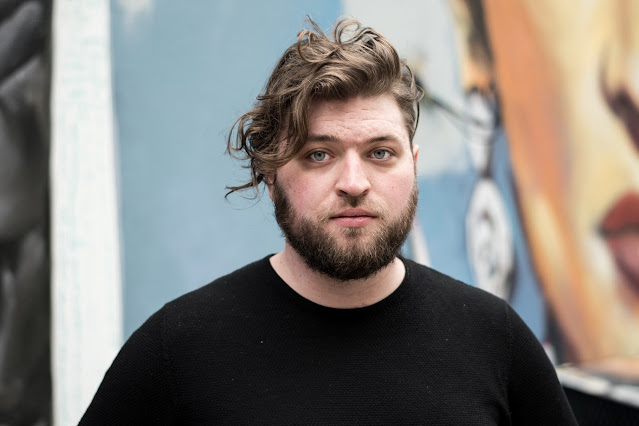

Trey Makler (courtesy photo)


Sunday, September 18, 2022

Sarah Wald in Conversation with Christian Baldini

On September 24, 2022, I will have the pleasure of conducting the world première of Sarah Wald's work "After Brahms", which she wrote for the Camellia Symphony in Sacramento. On the same program we will also perform Brahms' Symphony No. 4, which Sarah knew about when I asked her to write the piece. I had the chance of asking Sarah some questions about her music, and below are the answers:

Christian Baldini: Sarah, it will be a pleasure to bring your music to life once more. Please tell us about "After Brahms". How did you decide to include material from Brahms' 4th Symphony into your new piece?

Sarah Wald: Both of the other pieces on the program, Elgar's Cello Concerto and Brahms' 4th Symphony, are in E minor. So, I decided to compose something in E minor as well—I liked the idea of an E minor extravaganza! Following that, I thought taking material from the end of the Brahms symphony would provide a neat bookend for the concert. So I used a slightly modified version of Brahms' last-movement theme as my repeating bass line. 

CB: What are some tips and pointers about your music, and about this piece in general that people should listen for? What would you say to someone who does not know your music at all?

SW: This particular piece is all about repetition, but repetition that is constantly subjected to three different processes: cycling through different keys, getting passed around different instrumental groups, and increasing in tempo. I was interested in how the same material could take on different characters in these different iterations.

CB: What do you try to communicate with your compositions?

SW: I think that really depends on the piece. Some of my pieces are programmatic, meaning that they're about extra-musical subjects. In my vocal music, I'm trying to support and enhance the text I'm setting. In some cases, I'm simply concerned with crafting beautiful or intriguing sounds (in some kind of logical order). But in most of my pieces, I'm very concerned with affect, or going on some sort of emotional/psychological journey.

CB: You are also a very fine performer (Sarah was for three years principal flute of the UC Davis Symphony Orchestra) - can you tell us how being a performer has affected or influenced you as a composer?

SW: Thank you. Well, when I compose an orchestra piece specifically, I suppose I can't help imagining myself sitting in the flute section. What would it feel like? How would I hear my part in relation to the other parts? When playing orchestral repertoire, it's always fun to hear how you fit into the harmony, or to hear something you just played get picked up by another instrument, for example. So I think that perspective makes me think more carefully about how everything fits together.

CB: What advice would you give to young composers starting out? How do we connect with performers? What to do about choosing a good graduate program, or about getting commissions to write pieces? Anything else you would recommend?

SW: If you're in college or grad school, working with your fellow students/musicians can result in ongoing collaborative relationships years down the line. In a similar vein, attending summer music festivals or workshops is really invaluable, in my opinion: They offer additional performance/recording opportunities and broaden your network of potential collaborators. The Composer's Site is a good resource for finding various types of opportunities. And even basic Google searches for opportunities can help: When I was in college in NYC, I found out about the New York Youth Symphony's composition program just via Google search.

As far as choosing a good graduate program goes, I think it's mainly a matter of figuring out what you're looking for—what you want to get out of graduate school. Is there a particular teacher you want to study with? Are you interested in particular kinds of opportunities, like inter-departmental projects? Also, definitely talk to alumni of the programs you're interested in: You'll learn a lot about the program, good and bad, that you can't find out through any other channels.

CB: Thank you for your time, and I look forward to conducting the world première of this very imaginative piece that you have written for us!

SW: Thank you!


Sarah Wald was born in Chicago. She attended Columbia University in the City of New York for her bachelor’s degree in music with a focus in composition. While at Columbia, Sarah studied composition with Tristan Murail and Arthur Kampela, as well as with Robert Lombardo in Chicago. She also studied flute with Sue Ann Kahn.  Sarah then studied with Conrad Susa and David Garner at the San Francisco Conservatory of Music for her master’s degree in composition. For her master’s thesis, she composed and produced  Elegy for a Lady: a Music Drama in One Act. As a graduate student at the University of California, Davis, Sarah was awarded a Graduate Scholars Fellowship for her first year. She recently finished her PhD in composition and music theory. Her dissertation advisor was Kurt Rohde.


Over the past several years, Sarah's music has been featured at various festivals and other programs, including the Wintergreen Summer Music Festival, the European American Musical Alliance in Paris, the New York Youth Symphony’s Composition Program, the nief-norf Summer Music Festival, the Brevard Music Center, the TALIS Festival, and the Bowdoin International Music Festival. Her work was also performed at Sävellyspaja in Finland and has been featured on radio stations such as WFMT (Relevant Tones) and CJSR.


Sarah has received several honors, awards, and commissions. She graduated from Columbia magna cum laude and also received Columbia’s Rapaport Prize in 2012. In 2015, she was awarded professional development grants from the Illinois Arts Council Agency and Chicago's Department of Cultural Affairs and Special Events. Her percussion quartet, Pas de Quatre, was selected by the University of Tennessee Knoxville for performance at PASIC 2015's New Literature Showcase Concert. Sarah has also received several individual commissions as well as commissions from Access Contemporary Music, the University of Tennessee at Martin Contemporary Music Group, and the Saint Xavier University Flute Choir. In 2016 and 2017, she was selected in calls for scores from New Music on the Bayou and Vox Musica. She was also a selected composer for North/South Consonance's call for scores in 2018 and the Sewanee Summer Music Festival in 2020. In January 2020, Sarah was selected to compose a score for the Sound of Silent Film Festival in Chicago.

Currently, Sarah is a Resident Artist with the concert platform Sparrow Live and a Teaching Artist with the San Francisco Opera Guild.


Monday, November 1, 2021

Composer Profile: Laura Schwartz in Conversation with Christian Baldini

On November 6th 2021, I will conduct the Camellia Symphony Orchestra in Sacramento in a program that includes the world première of Laura Schwartz' work "Figment". Below is a brief interview with this very talented young composer. 

Christian Baldini: Laura, it will be a pleasure to conduct the world premiere of your new piece "Figment", which you wrote for the Camellia Symphony Orchestra. Tell me, how did you approach writing this piece? In your program notes you affirm that "During this piece you hear the bones of an acoustic x-ray." Could you develop further on this very intriguing idea? 

Laura Schwartz: In my process of writing Figment, I chose a few string techniques that already have a tendency towards “noisiness”. I write music that enhances the noise elements of sounds. Examples of compositional techniques I used in Figment that have noise as an integral part of their structure are the sound of the bow hairs striking the stings, the sound a very high note that gently wavers as the player changes their bow position, and the sound of a bow bouncing in a controlled an uncontrolled manner against the strings of an instrument. I consider noise to be the bones of a sound. Noise gives a listener an awareness of space and place, as the noisiness of the piece intermingles with the noisiness (mechanical hums, fans, or wind) of a performance venue. 

CB: What are some of the things you care about the most when it comes to music (both new and old)? 

 LS: In my music composition, form is a primary way I think about my taste in music. As a composer, I care about creating a piece that teaches the audience its internal logic and boundaries. It creates a sonic environment that becomes apparent through listening. For me, it is okay if the technical nuances or musical references are lost in the first or second listen. If the form is communicated, such that a sense of expectation and subversion of expectation is generated, then it is something I find musically attractive. For instance, Haydn’s String Quartet in Eb “the Joke” and Kate Soper’s “Only the Words Themselves Mean What They Say” are examples that capture this characteristic for me. 

CB: You studied at UC Davis (that's how we met, when you were still an undergraduate student), and you've developed a remarkable career already. Can you tell us about some of the most important or inspiring experiences and/or people that you've had so far? What has helped you or inspired you to continue growing and excelling as an artist? 

LS: At UC Davis, the support I had from my friends Cindy, Liz, and Kristina inspired me to continue in music. All three of them, who were not music majors, would go with me to experience the Empyrean Ensemble concerts (the new music ensemble at Davis). It became known as going to see the “weird music” with Laura. It helped me understand how a general audiences can view contemporary music, what could be picked up easily in a piece, and what would be lost. For me, learning how they listened shaped the “who” in the audience I write my music for. I strive to write music that captivates non-music specialists. In my music career, the support from my family has been immense. My mother is probably the person next to myself that has heard most of my pieces live. She is not a trained musician. She is a lover of music. Having one person who is always on my team and who is willing to take notes during a performance so that she can try to understand the conceptual nature of the piece better is a wonderful blessing. I excel because I am part of a network of support. 

CB: What would you recommend to someone who doesn't know your music yet. How should they approach it? Is there anything in particular that they should listen for? 

LS: For someone who does not know my music yet, I would recommend a short exercise. You will need your favorite piece of music, speakers, and an electric fan. Play the music while the electric fan is running. The interplay between the fan noise, the wind, and your music is what I write as my music. In approaching my music, I think of it like a logic puzzle or a mystery novel. An intriguing concept is introduced at the beginning of a piece. It is both deadly serious and mischievously lighthearted. The mystery is explored and elaborated on as clues during instrument dialogues are hinted at. How do the parts fit, blend, or contrast? Are all questions that I answer throughout the piece. I would recommend listening to the instrumental dialogues and how silence is shaded through noise. 

CB: To end this brief interview, I'd like to ask you to dream of a music festival for which you'd be the artistic director. What would you program? Which guests would you invite? Which orchestras and/or ensembles would be featured? (to make it even more difficult: you'd have unlimited funds!) 

 LS: The experience that I enjoy the most from creating music festivals is creating an immersive experience for an audience. At my dream festival, I would create a 8-week site specific event in collaboration with a local marching band, a video projection studio, and an octet that was a combined saxophone quartet and percussion quartet. I would commission four composers and four video artists to create music for this open air project. Bi-monthly would be a new premiere in the same space. As an artistic director, I strive to create scenarios that pose compositional conundrums that bridge artistic disciplines. 

CB: Thank you for your time, we look forward to performing your music! 

LS: Thank you to Christian Baldini and the musicians of the Camellia Symphony for the opportunity to write a new work for your ensemble. I look forward to listening to it.

Laura Schwartz (Photo by Natalia Banaszczy)


Laura Schwartz is composer and video projectionist. Her music explores written notation as a
facilitator of a performer’s own creativity and self-formation. She blends elements of
traditionally notation scores, verbally notated scores, and illuminated manuscripts situating the
participant in a space of their own curiosity and creativity. Schwartz uses cellphones, combs, and
cut flowers to highlight everyday technologies as shapers of our lived sound environments. She
performs guided improvisations on amplified electric fans and graphing calculators.

For more information visit www.lauraroseschwartz.com


Friday, November 1, 2019

Composer Profile: Qing Olivia Yang in Conversation with Christian Baldini

On November 9, I will have the pleasure of conducting the US premiere of Qing Olivia Yang's work "Alice", with the Camellia Symphony Orchestra in Sacramento. Below is a nice exchange we had with Olivia, in preparation for the performance.

Christian Baldini: Olivia, it will be a pleasure to welcome you in Sacramento as a composer and performer to bring your piece to life in California for the first time. The work is written for voice, sampler/electronics and orchestra, and it is not very usual to have the composer serve as the performer as well, so a special treat in many ways. Please tell us about the genesis of this work, based on a lonely whale. How did you get this idea and its inspiration for your music?

Qing Olivia Yang: Thank you for this wonderful opportunity to work with the Camellia Symphony Orchestra and you! I happened to read about Alice on the Internet and heard the real voice sampling of this whale. It was unable to communicate properly with other whales and was lonely because the whale had a frequency of 52Hz, compared with 15 to 25Hz for normal whales. Alice's situation reminds me of myself, and I often feel lonely like Alice: whenever some thought or action is not understood by others, especially those close to me... But I never give up expression, looking for my soul mate, just like Alice!
After seeing it, I immediately had a lot of inspirations. And I imagined expressing the resonance between human beings and animals in the form of orchestral music, electronic music and human voice: orchestral music is the sea, electronic music is Alice itself, and human voice represents human beings. These three voices sometimes appear in isolation, sometimes appear in each other indistinguishably.
I also have a unique design about the structure and style of the music. Depending on Alice's own sound motive, I develop it into a new melody, and gradually moving from impressionist music style to a contemporary music stylefinally back to the original voiceI want to express the change of Alice that from happiness in the sea originally to pain, loneliness cause the unique voice of itself when it finds that and finally it calms down and go on seeking the bosom friends.

The work premiered at the opera hall of the Central Conservatory of Music(Beijing, China) on June 25, 2018. The conductor was Mr.Hao Shen(professorof CCOM), and UNAM-CCOM orchestra and I played it. After the first performance, I received a lot of good comments.


CB: Who would you say are your main influences as a composer?

QOY: There are a lot of composers I like very much. Their work impressed when I was a child, such as Bach, Vivaldi, Brahms, Tchaikovsky, Debussy, Ligeti, and active in modern XiaogangYe, Jianping Tag, Wenjing GuoDun Tan, Guoping JiaWenchen QinChangyuan Liu, Binyang Li, Simon Steen Anderson, and so on.

CB: What do you try to communicate with your own music? What is special about symphonic music? Would you be interested in writing an opera?

QOY: I don’t want to limit my music or my expression by making music into a single style, but I would like to express an idea clearly in each work by “music”because I think the form should serve the content. So before each creation, I often imagine and choose a theme to express the spirit, and then determine the appropriate form, style and structure. Of course, I am very interested in opera, I love singing since I was a child, I think the voice is one of the most direct way to express music emotions. I've written several musicals, and I want to write an opera very much!


CB: Tell us about your background. You grew up and studied in China. Who were the main influences and teachers in your life?

QOY: I started to learn the keyboard when I was five years old. After one year of learning, I could play Bach's Gigue, then my first music teacher Mr. GuohuiQiao discovered my gift and recommend me to engage in music. After a few years, I studied music composition in the middle school attached to Central Conservatory of MusicProfessor Changyuan Liu is my first teacher of music composition, he is a very famous Chinese composer alsoAnd I studied fothe bachelor and master degree in the composition department of the CCOM, under Professor Jianping Tang and Guoping Jia, who are also very famous composers in China. I really appreciate all three teachers for their help with my studies and the inspiration they gave me in the road of music composition.


CB: Where do you see yourself in 10 years? What would you like to be doing?

QOY: I'm not sure where I will be after 10 years. I love traveling, maybe I will be in the Antarctic when we contact one day in the future. But no matter where I am, of course I will always write as a composer, this is my career, I can't live without music.

CB: Thank you very much for your time, and we look forward to featuring your considerable talents as singer and composer in Sacramento.

QOY: Thank you, Christian. Thank you everyone! I'm looking forward to the performance on the evening of 9th November!


Qing (Olivia) Yang (born in 1992), young composer, is a resident composer of the China Broadcasting Art Troupe. Qing is also a member of the Chinese National Orchestral Society.

Qing graduated from the Attached Middle School of Central Conservatory and got her bachelor’s degree of composition from Central Conservatory of Music. In 2015, she was recommended as a graduate student majoring in composition in Central Conservatory of Music. Qing was tutored by several great Chinese composers, including professor Changyuan Liu, professor Jianping Tang, professor Guoping Jia, etc.

During her study in CCOM, Qing won a considerable amount of prizes, honors, and scholarships. Qing Yang composes an extensive range of works. The compositions have won her several prizes. Qing composes works from serious music to popular music, from classical music to fusion music, even movie soundtracks. As it comes to the genres she composes, there are solo music, chamber music and symphony for both Chinese traditional instruments and western instruments.

Qing’s compositions are well performed both domestically and internationally. Her works have been performed in Beijing National Center for the Performing Arts, Zhongshan Concert Hall, Beijing Concert Hall, Central Conservatory of Music Concert Hall, Beijing Century Theatre, Peking University Centennial Hall, Hong Kong Cultural Center Concert Hall, Taipei Zhongshan Hall, etc. There are also overseas performances in cities in Europe and North America, for example, Toronto, Tallinn, Nuremberg.

Qing cooperated with some brilliant orchestras, including China Broadcasting National Orchestra, China Broadcasting and Film Symphony Orchestra, Central Conservatory of Music Symphony Orchestra, China Youth Symphony Orchestra, Xi'an Symphony Orchestra, Taipei City Orchestra, Camellia Orchestra, Yuanyang Chamber Music Group, etc. Qing also have cooperations with Jiapeng Peng, Ling Li, Tao Fan, Hao Shen, Christian Baldini, Chunquan Qu, Bingbing Zhang, Yujue Ji and many other outstanding conductors.

The representative works of Qing can be categorized into several genres. She wrote symphonies including The Flowing River Runs into the Heart, and Alice; the symphony for national orchestra, named Overture of the National Costums; the fusion work called Screaming, solo piece called The Memory of the Tashilhunpo Monastery for the instrument Sheng; the piece for chamber music called Samatha; national symphony with a small arrangement called Songs of Chu; Concertino named Road for Konghou; soundtracks for the movie Embarrassments in Vietnam; music for stage shows called Castle in the Sky and The Magic of Panda Fairy; music for contemporary primitive dance Women of the Dai Minority in Mountains; popular song called Shining Star.

In 2017, Qing’s work Road-Trilogy was selected in the Young Composing Talent Program of the China National Arts Fund. In 2018, Qing held an exclusive concert titled Screaming performing her compositions, which was highly praised by the audiences.