Showing posts with label Davis. Show all posts

Monday, November 1, 2021

Composer Profile: Laura Schwartz in Conversation with Christian Baldini

On November 6th 2021, I will conduct the Camellia Symphony Orchestra in Sacramento in a program that includes the world première of Laura Schwartz' work "Figment". Below is a brief interview with this very talented young composer. 

Christian Baldini: Laura, it will be a pleasure to conduct the world premiere of your new piece "Figment", which you wrote for the Camellia Symphony Orchestra. Tell me, how did you approach writing this piece? In your program notes you affirm that "During this piece you hear the bones of an acoustic x-ray." Could you develop further on this very intriguing idea? 

Laura Schwartz: In my process of writing Figment, I chose a few string techniques that already have a tendency towards “noisiness”. I write music that enhances the noise elements of sounds. Examples of compositional techniques I used in Figment that have noise as an integral part of their structure are the sound of the bow hairs striking the stings, the sound a very high note that gently wavers as the player changes their bow position, and the sound of a bow bouncing in a controlled an uncontrolled manner against the strings of an instrument. I consider noise to be the bones of a sound. Noise gives a listener an awareness of space and place, as the noisiness of the piece intermingles with the noisiness (mechanical hums, fans, or wind) of a performance venue. 

CB: What are some of the things you care about the most when it comes to music (both new and old)? 

 LS: In my music composition, form is a primary way I think about my taste in music. As a composer, I care about creating a piece that teaches the audience its internal logic and boundaries. It creates a sonic environment that becomes apparent through listening. For me, it is okay if the technical nuances or musical references are lost in the first or second listen. If the form is communicated, such that a sense of expectation and subversion of expectation is generated, then it is something I find musically attractive. For instance, Haydn’s String Quartet in Eb “the Joke” and Kate Soper’s “Only the Words Themselves Mean What They Say” are examples that capture this characteristic for me. 

CB: You studied at UC Davis (that's how we met, when you were still an undergraduate student), and you've developed a remarkable career already. Can you tell us about some of the most important or inspiring experiences and/or people that you've had so far? What has helped you or inspired you to continue growing and excelling as an artist? 

LS: At UC Davis, the support I had from my friends Cindy, Liz, and Kristina inspired me to continue in music. All three of them, who were not music majors, would go with me to experience the Empyrean Ensemble concerts (the new music ensemble at Davis). It became known as going to see the “weird music” with Laura. It helped me understand how a general audiences can view contemporary music, what could be picked up easily in a piece, and what would be lost. For me, learning how they listened shaped the “who” in the audience I write my music for. I strive to write music that captivates non-music specialists. In my music career, the support from my family has been immense. My mother is probably the person next to myself that has heard most of my pieces live. She is not a trained musician. She is a lover of music. Having one person who is always on my team and who is willing to take notes during a performance so that she can try to understand the conceptual nature of the piece better is a wonderful blessing. I excel because I am part of a network of support. 

CB: What would you recommend to someone who doesn't know your music yet. How should they approach it? Is there anything in particular that they should listen for? 

LS: For someone who does not know my music yet, I would recommend a short exercise. You will need your favorite piece of music, speakers, and an electric fan. Play the music while the electric fan is running. The interplay between the fan noise, the wind, and your music is what I write as my music. In approaching my music, I think of it like a logic puzzle or a mystery novel. An intriguing concept is introduced at the beginning of a piece. It is both deadly serious and mischievously lighthearted. The mystery is explored and elaborated on as clues during instrument dialogues are hinted at. How do the parts fit, blend, or contrast? Are all questions that I answer throughout the piece. I would recommend listening to the instrumental dialogues and how silence is shaded through noise. 

CB: To end this brief interview, I'd like to ask you to dream of a music festival for which you'd be the artistic director. What would you program? Which guests would you invite? Which orchestras and/or ensembles would be featured? (to make it even more difficult: you'd have unlimited funds!) 

 LS: The experience that I enjoy the most from creating music festivals is creating an immersive experience for an audience. At my dream festival, I would create a 8-week site specific event in collaboration with a local marching band, a video projection studio, and an octet that was a combined saxophone quartet and percussion quartet. I would commission four composers and four video artists to create music for this open air project. Bi-monthly would be a new premiere in the same space. As an artistic director, I strive to create scenarios that pose compositional conundrums that bridge artistic disciplines. 

CB: Thank you for your time, we look forward to performing your music! 

LS: Thank you to Christian Baldini and the musicians of the Camellia Symphony for the opportunity to write a new work for your ensemble. I look forward to listening to it.
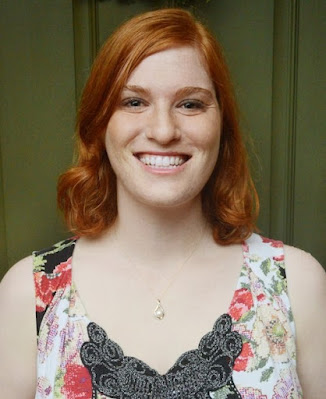
Laura Schwartz (Photo by Natalia Banaszczy)


Laura Schwartz is composer and video projectionist. Her music explores written notation as a
facilitator of a performer’s own creativity and self-formation. She blends elements of
traditionally notation scores, verbally notated scores, and illuminated manuscripts situating the
participant in a space of their own curiosity and creativity. Schwartz uses cellphones, combs, and
cut flowers to highlight everyday technologies as shapers of our lived sound environments. She
performs guided improvisations on amplified electric fans and graphing calculators.

For more information visit www.lauraroseschwartz.com


Monday, February 17, 2020

Roger Xia in Conversation with Christian Baldini

Pianist and violinist Roger Xia will be our soloist for Clara Schumann's Piano Concerto on Saturday, February 22 with the Camellia Symphony Orchestra in Sacramento. I had the opportunity of asking Roger some questions, and below are the answers.

Christian Baldini: Roger, it is a pleasure to welcome you back once again with the Camellia Symphony Orchestra. Some years ago, you were our featured "Rising Star", performing concertos on both the violin and the piano. It is so nice to see how much you have developed since those days, and what a mature musician you have become already. Please tell us, what is special to you about performing in the Sacramento and Davis region, where you grew up?

Roger Xia: The Sacramento/Davis region is where I feel most at home and I always love performing for friends and family. I frequently reconnect with old friends, both musicians and non-musicians, at my performances and it’s a joy to catch up with them about our busy lives and future plans. Most of all, I absolutely enjoy inspiring younger children to play classical music, just as I had been inspired and supported by the community.

CB: Tell us about the Clara Schumann Piano Concerto. What is inspiring to you about her? What are some of the features and musical elements that you like the most about this concerto, and what should people listen for while you play it?

RX: For me, the most inspiring element of Clara Schumann’s Piano Concerto is her boldness in incorporating a variety of styles. Some lyrical passages resemble Chopin, while other feisty, technical passages remind me of Liszt. I also like the attacca between the 3 movements of the concerto; the continuation gives the piece a nice flow and creates an unfolding storyline. I hope the audience will enjoy the affirmative and lyrical solo lines in the first movement, the intimate duet with the cello in the second, and the improvisatory, gypsy-like flair in the last movement.

CB: At your young age you've already collaborated with and worked with many wonderful musicians and teachers. Are there any experiences or people that have been particularly inspiring to you?

RX: I’m very fortunate to have started piano lessons with Linda Beaulieu when I was five, and to have continued to study with Dr. Natsuki Fukasawa and professor Richard Cionco for ten years. I’m also grateful to Dong Ho for starting me off on violin when I was six and William Barbini for teaching me during the past seven years. I’d also like to thank Maryll Goldsmith and Michael Neumann for their guidance when I was in the Sacramento Youth Symphony. Many thanks to teachers and staff members at the San Francisco Symphony Youth Orchestra and San Francisco Conservatory of Music Pre-College for continuously helping me develop my artistic potential. I’m also very thankful to Susan Lamb Cook’s continued support in my chamber music learning, Angelo Moreno at my school orchestra coaching. All of these mentors and supporters have inspired me to pursue my lifetime music-making journey.

CB: Why is art important? What is the role of music (and specifically, classical music) in today's world?

RX: Art is something that is unique to humans; it cannot be replaced by robots or AI. It is the most direct expression of the human soul, incorporating kindness, pain, tenderness, ecstasy, and more endless emotions. Music serves as a universal language, an outlet for all these kinds of emotions. As the only audible art form without words, music helps to connect people across the globe with all sorts of backgrounds and portray relatable experiences. Classical music is very unique in the way that it developed alongside music theory and incorporates sophisticated forms like symphonies and operas.

CB: Please tell us about your plans, dreams and wishes for your future. You have managed to continue your remarkable development on both the violin and the piano. What other passions do you have? And now that you will soon embark on your college career, what would you like to do?

RX: In addition to violin and piano, I really enjoy playing tennis and practicing Kung-Fu. moving my body around and breaking a sweat is also a great way for me to clear my mind and serves as a nice break from the academic and musical grind. Every winter, I also go to Lake Tahoe to ski as a mini-vacation with friends and family.
In college, I plan to continue playing piano and violin and participate in chamber music and orchestra ensembles. I’m also really interested in science and would like to simultaneously study academics at a university. Ultimately, I hope to combine music with science to help others.

CB: Thank you so much for your time, and we wish you all the best in your future, which will undoubtedly be remarkable. We look forward to sharing your astonishing talent with our audience very soon.


RX: Thank you Maestro Baldini and the Camellia Symphony Orchestra for inviting me back, and I’m looking forward to another great collaboration and performance!

Roger Xia, Photo by Carlin Ma

Roger Xia, Photo by Carlin Ma


Roger Xia, age 17, a senior at Davis Senior High School (DSHS), is also a San Francisco Conservatory of Music (SFCM) Pre-College scholarship student.                                                                                                                                  

         Roger started piano studies at age 5 with Ms. Linda Beaulieu and continues with Dr. Natsuki Fukasawa and Professor Richard Cionco.  He took violin lessons at age 7 with Mr. Dong Ho and continues with Mr. William Barbini.  At age 10, Roger made his Carnegie Hall debuts as first prize winner of the American Fine Arts Festival (AFAF) Golden Era of Romantic Music International Competition and the American Protégé International Music Talent Competition.  He won top prizes in Pacific Musical Society (PMS), Music Teacher Association of California (MTAC), United States Open Music Competition (USOMC), CMTANC/USIMC International Youth Music Competition, Diablo Valley College Competition (DVC), Sylvia Ghiglieri Piano Competition, and Classical Masters Music Competition, etc.  As the youngest participant in all three age groups, Roger was awarded the memorial scholarships sponsored by the MTAC Sacramento branch (2010, 2014, and 2017).  He also performed at the Junior Bach Festival, Bear Valley Music Festival, Orfeo International Music Festival, InterHarmony International Music Festival, and joined the National Youth Orchestra (NYO-USA) in the summer of 2019.  Roger won the 2015 Mondavi Young Artist Competition Pianist and Bouchaine Young Artists Prizes and was featured on the 2016 From the Top show 322.  He is also the National Young Arts Foundation merit award winner (2018) and honorable mention winner (2020) of Classical Music.  Roger played as a soloist with the Merced Symphony Orchestra (2010), Sacramento Youth Symphony (SYS) Premier Orchestra and Central Valley Youth Symphony (CVYS) Orchestra (2014), UCD Symphony Orchestra (2016), as well as the Palo Alto Philharmonic and Camellia Symphony Orchestra (2017). He was the winner of the DSHS Concerto Competition in 2018 and performed as a violin soloist with the DSHS Symphony Orchestra at Carnegie Hall in the summer of 2018. Roger is also the winner of the 2019 San Francisco Symphony Youth Orchestra (SFSYO) Concerto Competition and played as a piano soloist at Davies Symphony Hall with the orchestra in the fall of 2019.
         Roger has also been studying chamber music with Susan Lamb Cook, William Barbini, Natsuki Fukasawa, Aenea Keyes, Doris Fukawa, Gwendolyn Mok, Temirzhan Yerzhanov, and Angelo Moreno.  He is a violinist and founding member of the SFCM Pre-College Division ensemble Locke Quartet, which won second prize in the 2019 ENKOR competition.  Roger has also attended the prestigious Boston University Tanglewood Institute (BUTI) Summer String Quartet Workshop in 2017.  His chamber music groups in the Davis-Sacramento area won top places at USOMC (2013), Classical Masters Music Festival (2013), and VOCE competition of MTAC (2013 and 2015).  These groups have been frequently invited to perform at senior residences in the Sacramento and Davis area.  Roger has been the concertmaster of SFSYO for the past three seasons and the Europe Performance Tour in the summer of 2019.  He is the current concertmaster of the DSHS Symphony Orchestra.  He was also the concertmaster of the Holmes Junior High (HJH) Orchestra (2014-2017), the California Orchestra Directors Association (CODA) Honor Symphony Orchestra (Nov. 2016), and the SYS Premier Orchestra (2013-2015) and Classic Orchestra (2010-2011).
         Aside from music, Roger enjoys science, math, reading, and movies.  He also likes swimming, skiing, and Kung-Fu, as well as playing tennis, Ping Pong, and soccer.  Most of all, he loves sharing music-making experiences with friends in the community.

Saturday, October 26, 2019

Carrie Hennessey in Conversation with Christian Baldini

On November 9, the Camellia Symphony Orchestra will present Ein deutsches Requiem by Johannes Brahms. Below is an interview with our soprano soloist, Carrie Hennessey:


Christian Baldini: Carrie, it is a pleasure to welcome you back to the Camellia Symphony Orchestra for this beautiful music. You and I have worked together with different orchestras in various cities, and it is wonderful for me to showcase your gorgeous voice with our orchestra here in Sacramento. Please tell me, how does the Brahms' Requiem fit within the usual (operatic) repertoire that you sing more frequently? 

Carrie Hennessey: The vocal line for this particular aria is quiet, extremely long, expansive, fluid and exposed. Often in the operatic repertoire that I sing, someone in the orchestra is doubling the vocal line which gives more ease to the singer, because if something goes a bit off the rails technically, there is backup in the orchestra. This opening passage really takes so much technique, but once it felt comfortable to me, it is the one line that I completely relish in ALL the repertoire that I sing! It’s quite special. This vocal line in the Brahms is beautifully accompanied by the orchestra with a counter melody that lingers in the air which allows for the opening phrase to also linger and spin. The soprano line then joins the orchestra at the end of the first few phrases and then brings in the chorus’ first lines. Just stunning!

CB: Besides the obvious soprano solo movement "Ihr habt nun Traurigkeit", what are some of your favorite moments in this piece?

CH: Movement IV, Wie lieblich sind deine Wohnungen is one of my favorite movements! This was one of my mother’s favorite bible verses. She was my accompanist growing up and my musical inspiration, so to hear this text set with such joy right before I sing my aria is perfection for me. My mother passed several years ago, and never heard me sing this piece. The aria was added later after Brahms’ mother had passed, so this is quite a moment of comfort and joy for me .


CB: This is for sure an unusual Requiem, not only in the choice of language, as most others are in Latin, but also in the fact that the composer himself carefully chose the texts that represented the message he wanted to communicate. What are your feelings about this, and about the general feeling of the piece?

CH:I have to say I feel deeply connected to this work. The texts chosen were truly for humankind and were all inclusive. We all feel grief. We all need comfort. The opening lines make me weep every time with their ethereal and shimmering beauty "Blessed are they that mourn, for they shall be comforted.” This truly is a work of hope, a work looking to find and give comfort in the chosen texts instead of focusing on the fire and brimstone contained in the more traditional Requiem texts.


CB: Thank you so much for sharing your wonderful gifts with us, we very much look forward to the performance!

CH: Christian, thank you so much! I look forward to our time together with Brahms!


Known for her soaring voice and richly nuanced characters, soprano Carrie Hennessey is consistently thrilling audiences and critics in opera and concert appearances around the world. Ms. Hennessey’s much awaited debut in Previn’s A Streetcar Named Desire “gave us a Blanche that let us burrow into her character’s soul, even into the darkest crevices…Hennessey, using a one-two punch of music and drama, made it resonate in a way that equaled the finest stage performances of the part I’ve seen.” (Fresno Bee) Ms. Hennessey’s embodiment of the title role in the West Coast Premiere of Tobias Picker’s opera Emmeline earned her a Bay Area Broadway World Awards for “Best Leading Actress in a Musical” nomination. Praised for bringing her signature “exquisite vocal purity and range to the title role”and was “nothing short of sensational” (San Francisco Classical Voice). As Mimì in La Bohème, Ms. Hennessey “..possessed of a full, powerful lyric soprano, which delivers Puccini’s arias and duets richly. Her “Mi chiamano Mimì” (Yes, they call me Mimì) in Act 1 is gorgeous”. (San Francisco Classical Voice) On only one day’s notice, Ms. Hennessey made her debut with the Modesto Symphony Orchestra, as soprano soloist in Mahler’s Symphony No. 4, to great acclaim.

2020/2021 season includes a title role debut in Kát’á Kabanová by Leoš Janáček, Rose in At the Statue of Venus by Jake Heggie. Ms. Hennessey will also perform in Blitzstein’s Triple Sec and a world premiere of the opera Bones of Girls by librettist, Cristina Fríes and composer, Ryan Suleiman, both aforementioned productions with The Rogue Music Project, a collective of performers that cultivates adventurous musical and theatrical experiences. Other performances include collaborating in the development and performance of a world premiere ballet with choreographer Darrell Grand Moultrie and the Sacramento Ballet, Carmina Burana, Beethoven’s Symphony No. 9, Gounod’s Messe solennelle en l’honneur de Sainte Cécile, Brahms’ Requiem, as well as numerous recitals, chamber music and orchestral concerts, cabarets and continuous music education projects.

Recent engagements include Ms. Hennessey’s orchestral debut of the Strauss’ Vier Letzte Lieder with conductor Daniel Stewart, a celebration of Leonard Bernstein’s music with concert “Bernstein 100” with the Colorado Symphony and Sinfonia Chamber Brass, a role debut in a sold out run as Estelle in the opera The Stronger, a recital in several East Coast venues “Crisis of Faith” with bass Paul An of arias, duets and scenes from new operas including several World Premieres, Song of Sacramento a recital benefitting the Sacraemtno Children’s Chorus, featuring local composers and 8 world premiere songs, Carmina Burana with Sacramento Ballet, Mozart’s Exsultate, Jubilate! and Requiem, Beethoven’s Symphony No. 9, chamber works including Respighi’s Il Tramonto, Ravel’s Trois Poèmes de Stéphane Mallarmé and William Walton’s Façade, as well as several appearances in recital.

Previous performances include Britten’s War Requiem, Mahler’s Symphony No. 2 as well as debuts at the Concertgebouw in Bruges, in Ypres, Belgium and at the Liederhalle in Stuttgart, Germany singing the soprano solo in the Verdi Requiem. Alongside the world-renowned composer Ricky Ian Gordon in the fall of 2016, Ms. Hennessey gave Master Classes and performed a recital of his original art songs.

Notable recent opera highlights include Blanche Du Bois in André Previn’s A Streetcar Named Desire, Sarah Miles in the Bay Area premiere of Jake Heggie’s The End of the Affair with West Edge Opera, Mimì in La Bohème, Elle in La Voix Humaine in NYC, Lauretta in Puccini’s Gianni Schicchi and Magda and Floria Tosca in Puccini: A Man and His Muses for Sacramento Opera. Notable concert appearances include Other highlights include her debut with the Houston Symphony at Jones’ Hall, Mozart’s Mass in C minor at St. Stephen’s Cathedral in Budapest, Hungary and Reduta Hall in Bratislava, Dvorak’s Requiem in Rudolfinum Hall in Prague, Mahler’s Lieder eines fahrenden Gesellen at the International Mahler Festival in the Czech Republic, the Verdi’s Requiem, Mozart’s Requiem, Villa Lobos’ Bachianas Brasileiras No. 5, Mendelssohn’s Elijah and Lobgesang. the Mahler’s Symphony No. 4, Beethoven’s Symphony No. 9 and Vaughn Williams’ Dona Nobis Pacem.Handel’s Messiah with the renowned Pacific Symphony, Stravinsky’s ballet Pulcinella, Mahler’s Das Lied von der Erde at the Mondavi Center for the Performing Arts, a World Premiere song cycle written for Ms. Hennessey and the Rootstock Percussion Trio, Orff’s Carmina Burana with Grand Rapids Symphony, and Fauré’s Requiem and Brahms’ Requiem with Oakland Symphony where Hennessey brought “bright tone and elegant legato”.

Ms. Hennessey directed the Sacramento Children’s Chorus their joint production in Brundibar Sacramento Opera, is currently an artistic advisor to the board and mentor to the artistic staff. Ms. Hennessey continues to actively support music education through lectures. workshops and Master Classes in the communities in which she works, as well as nurturing a thriving private vocal studio in Northern CA.

Tuesday, October 22, 2019

Malcolm MacKenzie in Conversation with Christian Baldini

On November 9, the Camellia Symphony Orchestra will present Ein deutsches Requiem (A German Requiem) by Johannes Brahms. Below is an interview with our baritone soloist, Malcolm MacKenzie:


Christian Baldini: Malcolm, welcome back! It was some years ago that you and I first worked together, and though our schedules not always line up, I am so excited to welcome you back to the Camellia Symphony Orchestra for this beautiful work of music. Please tell me, how does a piece like the Brahms' Requiem fit within the operatic repertoire that you typically sing more frequently?

Malcolm MacKenzie: I'm so excited to work with you again!  Actually, this will be my first time singing this piece, and as your question implies, a rare opportunity for me musically. Interestingly, I've had a love of Brahms' since I sang a duet of his while still in college.  I'm delighted to be able to return to him.  

CB: Besides the beautiful baritone solo movements, what are some of your favorite moments in this piece?

MM: This is a difficult question, but I suppose I would have to say the 5th movement.  It's message of comfort for the living, I find especially moving. 

CB: One could say that Brahms' is an unusual Requiem, not only in the choice of language, but also because of the fact that the composer himself carefully chose the texts that represented the message he wanted to communicate. What are your feelings about this message, and about the general atmosphere and feeling of this piece?

MM: Yes... being a Catholic school educated, Secular Humanist myself, I have a great affinity for Brahms' point of view when composing this piece.  As a religious work, it is very unusual, with its focus on the comforting of those left behind after a death.  The piece really does have a unique, some might say radical, point of view for the time.   Choosing to abandon the liturgical elements of the traditional requiem, and picking only verses that spoke to him, personally, was very unusual.  Interestingly, I see this specificity, this concentration on an individual's personal relationship with God, as a way to broaden the reach of the message of consolation within the work to those outside of the Christian faith.  I wonder if that might have been his aim all along.  

CB: You've recently started teaching voice lessons at UC Davis, and I hope that many of your students in the music department will come to listen to you sing this marvelous piece. What are some of the things you enjoy the most about teaching?

MM: Yes!  One of the neat things about teaching at UC Davis is the wide variation of students I see.  I have everything from first time singers, to those with advanced degrees in vocal performance.  One lesson, I'm teaching a student ear training, the next we're working on polishing a Mozart aria.  That variation keeps me thinking!  

CB: Thank you so much for sharing your wonderful gifts with us, we very much look forward to the performance!


MM: My pleasure!  I'm so looking forward to working with you and the other wonderful musicians who'll be performing!  


With a voice described as having a “rich vocal range full of inviting nuance,” Malcolm MacKenzie continues to attract attention in the dramatic baritone repertoire. Opera News recently praised him as a “confident, commanding Count di Luna…of robust tone, ardent address, arching phrases and genuine baritonal squillo.” Of his recent role debut as Baron Scarpia they wrote: "His rich, warm, and dark tone was bolstered by a relentless legato line which amplified the sensuous sleaziness of his Scarpia."

Mr. MacKenzie has been heard at leading opera houses throughout the U.S. and Europe, appearing at the Metropolitan Opera, New York City Opera, Paris Opera (Bastille), Finland’s Savonlinna Festival, Washington National Opera, Los Angeles Opera, Glimmerglass Opera, San Diego Opera, Arizona Opera, Fort Worth Opera, and Pittsburgh Opera, in roles including Simon Boccanegra, Iago, Tonio, Baron Scarpia, Don Giovanni, Count di Luna, Renato, Jack Rance, Marcello, Germont, and Count Almaviva.   

Recent engagements for Mr. MacKenzie have included returns to North Carolina Opera as Baron Scarpia in Tosca, Colorado Opera as Germont in La traviata, and to Pittsburgh Opera as Stubb in Jake Heggie’s Moby-Dick; as well as role debuts in North Carolina Opera's Rigoletto in the title role, Baron Scarpia in Opera Omaha's Tosca, and with Opera San Jose as Don Alfonso in Così fan tutte; returning to Dayton Opera as Tonio in I pagliacci; creating the role of Roger Chillingworth in Colorado Opera's world premiere of The Scarlet Letter by Lori Laitman; returning to LA Opera as Stubb in Jake Heggie’s Moby-Dick; Enrico in Lucia die Lammermoor with Eugene Opera; Giorgio Germont in La traviata with Virginia Opera; and Schaunard in La bohème  with San Diego Opera; a return to the Metropolitan Opera as Dancaïre in Carmen; the title role in Simon Boccanegra with Kentucky Opera; Belcore in L’Elisir d’amore with San Diego Opera; Iago in Otello with Nashville Opera; Count di Luna in Il trovatore with Arizona Opera; Alfio/Tonio in Cavalleria rusticana/I pagliacci with Arizona Opera; and Jack Rance in La fanciulla del West with Nashville Opera.

Other performances have included La traviata with Glimmerglass Opera, where Opera News described him as “a stentorian Germont, singing with a steely beauty that matched the character’s resolve;” Schaunard in La bohème for San Diego Opera; Figaro in Il barbiere di Siviglia, and Count Almaviva in Le nozze di Figaro with Sacramento Opera; Sharpless in Madama Butterfly for San Diego Opera; the baritone soloist for Horatio Parker’s  rarely performed Hora Novissima with the Pacific Master Chorale; and Beethoven’s Ninth Symphony with the Reno Philharmonic.

On the concert stage, Mr. MacKenzie has performed frequently as the baritone soloist for Carl Orff’s Carmina Burana, most recently with the Alabama Symphony, Los Angeles’ New West Symphony, the Symphony Orchestra of the University of California, Davis and the Savannah Symphony.  The UC Davis performance is available on YouTube and has received over 19 million views.  He has also appeared with the Los Angeles Master Chorale, the Pacific Chorale, the Los Angeles Mozart Orchestra, and the Madison Symphony.