Showing posts with label Concerto. Show all posts

Monday, May 19, 2025

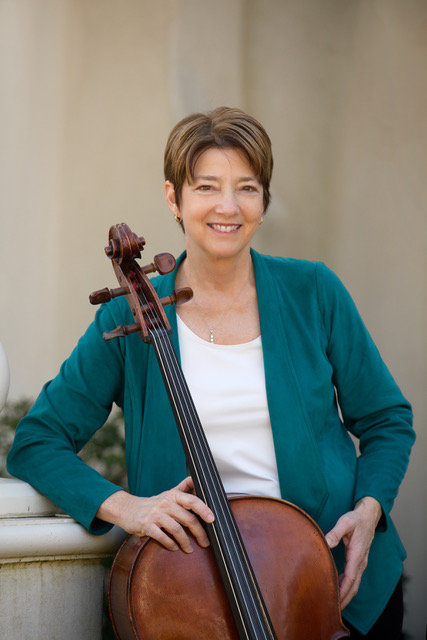
Susan Lamb Cook in Conversation with Christian Baldini

On June 7, 2025, I will have the pleasure of collaborating with cellist Susan Lamb Cook, once again, as our soloist. This time it will be Bruch's Kol Nidrei, with the Camellia Symphony Orchestra in Sacramento, in a program that also includes Mahler's Symphony No. 1 and the world première of Gabriel Bolaños' work "turbios". Below is a conversation with Susan:


Susan Lamb Cook is currently Lecturer in Cello and Chamber Music at the University of California, Davis.  She is a member of the Sacramento Philharmonic & Opera and the Sacramento Choral Society and Orchestra and is Artistic Director of the VITA Academy’s Great Composers Chamber Music Series.  She is an active performer and educator both nationally and internationally and is sought after as soloist and chamber musician with performances throughout Europe, the Far East, and the United States.  She has served on faculty for the Saarburg Festival, Germany, the Vianden Festival, Luxembourg, and on the artistic staff for the Classical Music Festival in Eisenstadt, Austria.  As a member of the Kismarton Trio, Susan has performed concerts in the Hungarian National Museum and the Petöfi Museum of Literature, Budapest, and performed the opening concert for the 2024 International Music Festival, Grosslobming, Austria. She has performed as soloist with numerous orchestras and is highly regarded as master clinician.  Following her studies at the University of Iowa with Charles Wendt, she moved to Vienna, Austria where she continued her studies and performed with numerous ensembles in Austria, Hungary, and Italy.  During the decade she spent in Europe, Susan performed with the Arena di Verona opera orchestra, completing three seasons and joining the orchestra for a tour of Egypt with performances of Aida which used the grand Luxor Temple as backdrop.  She completed at degree at the Academy of Music in Vienna, Austria under the guidance of Angelica May, then joined the teaching staff as assistant professor of cello, a position she held for two years before returning to her home of Sacramento.

Wednesday, March 26, 2025

Fiona Cunninghame-Murray in Conversation with Christian Baldini

This Saturday, March 29, I will have the pleasure of collaborating with violinist Fiona Cunninghame-Murray as our soloist in Sacramento for Jenö Hubay's Carmen Fantaisie, with the Camellia Symphony Orchestra. I had the chance to ask Fiona some questions, and here are her answers:

Christian Baldini: Fiona, it is a pleasure to be making music with you, especially after hearing so much about you. Welcome! You recently made your debut as a soloist sharing the stage with Joshua Bell in Bach's Double Concerto. Tell us about this experience and how you felt. I imagine he must have been one of your heroes growing up, so how has this experience transformed you?

Fiona Cunninghame-Murray: Thank you so much for having me! My debut with Joshua Bell and Academy of St Martin in the Fields was incredibly transformative. Growing up, he was definitely a figure that I looked up to so it felt surreal to perform with him. Because this concert was sold out and on the subscription series for San Francisco Symphony, I learned a lot about the relationship between preparation and nerves. I was very lucky to have the support of my wonderful teacher Chen Zhao, who made sure that I was prepared for anything and everything on the night of the concert. I am very grateful to have been awarded this opportunity and I hope to grow from here. 

CB: And I understand you have been borrowing a truly special instrument too? Tell us about it, and how it reached your hands.
FCM: Yes, I had the honor of playing on a 1728 Stradivari titled “Caressa, Thunis” generously loaned to me from Bein and Fushi. Playing on that instrument taught me a great deal about violin playing and it has been incredible to perform on a piece of history. 

CB: Who have been your most important mentors, and why?
FCM: My teacher Chen Zhao has been an incredible mentor to me. I have only known him for a year but in that time I have grown so much as a musician in terms of artistry and experience. He has gone above and beyond for me in order to make sure that I am the best that I can be. I also need to mention my father because he was my first and longest running mentor. Although he is not a classically trained musician, he spent the last two decades learning alongside me in order to support me. I am very grateful for everything that he has done for me.

CB: What are your earliest musical memories? How did it all start for you?
FCM: Music has always been in my family. One of my uncles was a theory teacher at the Royal Irish Academy of Music and another performs traditional Irish music in a band. My father plays the piano and accordion as well. I began playing the violin at age 3. My mother had a full sized violin, bigger than I was at the time, and I gravitated towards it. I was lucky enough to be enrolled in lessons for both classical and Irish traditional music and it went from there. 

CB: What would be your advice for young musicians? In particular, how do you deal with frustration or adversity?
FCM: When I feel frustration in the practice room, I know I am doing something right. In order for performing to be enjoyable and free, practicing must consist of hard work and sometimes hard work can feel frustrating. A lot changed for me when I learned to push through my frustration and be patient with the learning process. 

CB: Who are your favorite composers/works, and why?
FCM: This is a hard question! For violin repertoire, I am a fan of exciting show pieces, which is why Carmen is perfect. In terms of symphonic repertoire I love Rachmaninov and Shostakovich, for example Isle of the Dead and Shostakovich’s Piano Concerto no. 1. I spend a lot of time listening to French Impressionism, especially for solo piano repertoire and chamber music. There is so much incredible music out there it is impossible to pick just one. 

CB: Tell us about Hubay and his extraordinary Carmen Fantaisie. What should people listen for in this piece?
FCM: Carmen, the opera, is an iconic work that has infiltrated almost every instrument’s repertoire. For violinists, there are three well-known Fantasies each with their own set of challenges and excitement. The Hubay Carmen is less frequently played in comparison to both Sarasate and Waxman’s. If you are familiar with the opera, you will hear the motifs weaved into the technical passages. It can be fun to pick out the melody in these sections. Often during these passages, I am focusing on the melody instead of each individual note. 

CB: What's your most memorable orchestral experience? Any fun facts to share? 
FCM: My recent debut is my most memorable orchestral experience. I have always loved performing and not only was that my biggest concert to date, it was also the most fun I have ever had!

CB: Thank you Fiona, I look forward to making music with you and introducing you to our audience members!
FCM: Thank you so much, I am honored to collaborate with you and the incredible members of this orchestra!


Violinist Fiona Cunninghame-Murray, a rising talent born in Marin and raised in Baltimore, studied at the Peabody Pre-Conservatory with Lenelle Morse and earned her Bachelor's degree under David Halen, Concertmaster of the St. Louis Symphony, at the University of Michigan. Currently, she is pursuing her Master's degree at the San Francisco Conservatory of Music, studying with Chen Zhao, violinist of the San Francisco Symphony.

During her summers, Cunninghame-Murray has participated in prestigious music festivals, including the Meadowmount Festival, where she studied with Gerardo Ribeiro, Sally Thomas and Kikuei Ikeda of the Tokyo String Quartet, and the Aspen Music Festival under Robert Lipsett. Her performances include sharing the stage with Gil Shaham and the Aspen Festival Orchestra and collaborating with Wynton Marsalis and the Jazz at Lincoln Center Orchestra.

Cunninghame- Murray has also participated in masterclasses with distinguished artists Hilary Hahn, Midori Goto, Daniel Ashalamov of the American String Quartet and Daniel Phillips of the Orion String Quartet.

Fiona Cunninghame-Murray recently made her debut with Joshua Bell and the Academy of St. Martin in the Fields in this special program presented by the San Francisco Symphony as part of the Great Performers Series.

Wednesday, December 4, 2024

Alina Kobialka in Conversation with Christian Baldini

Alina Kobialka is a remarkable violinist that I have known for a long time, and she has been a regular collaborator for me on several violin concertos. We sat down to discuss her upcoming performance of Bruch's Scottish Fantasy, which she will perform as our soloist with the Camellia Symphony Orchestra in Sacramento on December 7, 2024. Below is our exchange:

Christian Baldini: Alina, what a pleasure it is to collaborate with you again! It has been a while since the first time we met, and since the first time we performed together. You were probably 12 or 13 years old the first time I heard you play. Tell me, what are some of your favorite moments and musical gestures in the Scottish Fantasy, and why? What should people listen for in this piece?

Alina Kobialka: I am thrilled to collaborate with you again with this beautiful piece! It's hard to pick some favorite moments because I love the musical journey of the entire piece. If I had to choose, the very opening of the piece would be one of them, where the orchestra sets up this dream-like atmosphere for the solo violin to enter with a beautiful, quasi-cadenza-like melody. There are also so many other lovely moments in the piece where I get to trade lines with various instruments in the orchestra or even duet together with them. That's something that people can listen for in this piece, along with all the beautiful melodies and harmonies that are created. The harp also plays a great role, so definitely pay attention to that! I love that I get to sing my heart out with this piece, and then it all culminates in the exciting and challenging final movement. I've wanted to play this piece for a long time, and I am delighted that I finally get to! 

CB: A lot has happened since you and I first met. Now you are a tenured member of the New York Philharmonic, still at a remarkably young age! Tell me, how have the last couple of years been? What can you share about being a member of the NY Phil and working every week with wonderful soloists and conductors? What are some of your favorite memories?

AK: I feel incredibly lucky to be a member of the NY Phil. I have amazing colleagues, and it's so joyful and inspiring for me to play with them week after week. I am always learning from them and continuously motivated to improve myself to be the best musician and colleague. There is a certain flexibility that is also required from this job, as we are constantly working with many different soloists and conductors, and it's always amazing to me how quickly the orchestra can adjust and adapt. My favorite memories include working with exceptional soloists (I still remember how Emanuel Ax's encore made me cry!) and fantastic conductors who bring a certain energy and fun to the week. I got the chance to play the chamber version of Appalachian Springs with Hilary Hahn, and it was so fun to work with her in a smaller group setting. I also played a mixed-genre concert with Jacob Collier, Chris Thile, and Madison Cunningham, and it was amazing to see the improvisation and communication between those musicians. I could go on and on. It's been a phenomenal two-ish years with the orchestra. 

CB: Being a California girl, and after living in Chicago (for College), and now living in New York, what are some of the main differences you notice? And also, what do you miss the most about California?

AK: The first and most obvious answer that comes to mind is the weather! Going from no seasons to extreme seasons shocked me, and sadly, I still can't confidently walk in the snow. What I love about these cities is that they all have different personalities, and the experience varies from neighborhood to neighborhood. I do miss how accessible nature is in California, especially the beaches and hiking. But I love living in NYC and am lucky to be close to Central Park! 

CB: You have developed wonderful long-term relationships with many musicians, including Donato Cabrera and Michael Tilson Thomas. You and I have also performed several concertos together. What do you notice in these experiences where you know your collaborators so well? Is it quite different from performing with someone for the first time?

AK: I've been so lucky to have many great musical experiences with you all. A certain familiarity comes from collaborating continuously over time, and it can be easier to communicate specific musical ideas you have. It can be different when performing with someone for the first time, as you are familiarizing yourself with the person's style. Still, I've been fortunate to work with many great, flexible musicians who make the experience easy. 

CB: You are also an avid chamber music performer. What are some of your favorite things about performing chamber music?

AK: There is so much fantastic chamber rep, and I always have so much fun performing it. Chamber music has made me a better musician, as I've learned how to listen, communicate, and lead through it. I've also learned so much about timing and phrasing. I love collaborating and performing with other musicians, and I feel so fortunate to be able to play so much chamber music! 

CB: What are some of the next projects that you really look forward to? Also: what are some dreams you have which you may not have realized yet?

AK: I am performing Britten's String Quartet No. 1 with my colleagues in January. I love his music and would love to perform more of his works. Gustavo Dudamel, our incoming music director, is also coming in the spring, so I am incredibly excited about that! I am also passionate about community concerts and giving back, and I am working on putting together some projects with various organizations in NYC. I am currently living the dream, but I always strive to learn, find inspiration, and feel fulfillment, whatever that may mean at specific points in my life. 

CB: Welcome back Alina, and thank you very much for your time. I look forward to featuring your wonderful musicality with our audiences in Sacramento!

AK: I'm so happy to be back and excited to make music with you and Camellia Symphony again! 

Violinist Alina Kobialka holding her violin

Praised for her “beautiful tone, effortless precision, and musical maturity beyond her years,” Chinese-American violinist Alina Kobialka joined the New York Philharmonic in 2022. Hailed as a “jaw-droppingly assured” soloist with a gift for making “present and future converge” (San Francisco Classical Voice), Kobialka’s artistry shines as a collaborator, chamber musician, and soloist. “Watch for her name. She appears to be bound for greatness” (Las Vegas Review-Journal).

Since joining the New York Philharmonic, Kobialka has performed with luminaries such as Hilary Hahn, Yo-Yo Ma, and Emanuel Ax. She frequently appears in the Philharmonic’s Merkin Hall Chamber Series and has toured extensively in Asia, including Taiwan, Hong Kong, and China. In May 2024, she performed with the World Union Orchestra in South Korea alongside members of the New York Philharmonic, Berlin Philharmonic, Vienna Philharmonic, and Royal Concertgebouw Orchestra.

A three-time artist at the Marlboro Music Festival, Kobialka has collaborated with legendary musicians such as Dame Mitsuko Uchida, Jonathan Biss, and Kim Kashkashian. Her love for cross-genre collaboration has brought her to the stage with Jacob Collier, Chris Thile, and Esperanza Spalding in performances seamlessly blending classical, folk, and jazz elements.

Kobialka is a prizewinner of the 2017 Elmar Oliveira International Violin Competition and a laureate of the 2016 Irving M. Klein International Competition. She also received the Grand Prize at the Mondavi Center National Young Artists Competition.

A San Francisco native, Kobialka made her solo debut at age 14 with the San Francisco Symphony during its 100th Anniversary Concert at Davies Symphony Hall. She has since appeared with the orchestra three times, most recently under the baton of Michael Tilson Thomas. Other solo engagements include performances with the Las Vegas Philharmonic, ProMusica Chamber Orchestra, and Asheville Symphony.

Kobialka began her violin studies at age five with Li Lin and later trained at the San Francisco Conservatory of Music’s preparatory division under Wei He. At 16, she moved to Los Angeles to study at the Colburn School’s Music Academy with Robert Lipsett and Danielle Belen. She earned her master’s degree from the Cleveland Institute of Music, where she studied with Ilya Kaler.

Thursday, September 19, 2024

Catherine (Shin-Rou) Lin in Conversation with Christian Baldini

On September 28, I will have the pleasure of conducting Brahms' Violin Concerto with Catherine Lin as our soloist with the Camellia Symphony Orchestra in Sacramento. Also on the program are Daniel Godsil's "Cathedral Grove" and Shostakovich's Symphony No. 1. Below is an interview with Catherine. (click here for ticket information)

Christian Baldini: Catherine, welcome, and let's start by talking about Brahms. What do you like the most about this concerto? Why is it special? What should people listen for in this piece?

Catherine Lin: Brahms is definitely one of my favorite violin concertos. It has a lot of beautiful melodies and lines between the solo violin and the orchestra. Why is this piece special? I think the most interesting thing and unusual thing is Brahms gives the orchestra a very strong role and, not just for the soloist. I highly recommend everyone to listen to the sixteen notes from the orchestra part in the first movement and the beautiful melody in the beginning of the second movement. All the themes can also be heard in the orchestra parts too.

CB: Let's talk about your beginnings with music. Growing up in Taiwan, how did you first encounter the violin? Did you play other instruments as well?

CL: First time I saw the violin was when I was three. My brother was practicing on his violin. I saw it and I told my mom I also want to play this instrument and she said, “Ok, only if you decide to make the violin as your career, otherwise you should just play the piano since I’m a piano teacher.” I was very excited and said yes! I will practice every day. Now, I feel very lucky that I made the right choice.

As for other instruments, as I mentioned, my mom is a piano teacher, so she taught me theory, piano and musicianship (like rhythm and solfège). So I know how to play piano and when I was in middle school, I also learned percussion for a year and that was fun!

CB: Who are some of your favorite composers? And favorite violin concertos?

CL: Paganini, Beethoven, and of course, Brahms. I like many violin concertos, such as Tchaikovsky, Sibelius and Glazunov, but if I have to pick one it will still be the Brahms violin concerto.

CB: Have you played a lot of chamber music as well? Is the experience different from playing as a soloist with an orchestra?

CL: Yes, I’ve played a lot! Playing chamber music is very fun, but it’s different from playing with an orchestra. The size of a chamber group is much smaller. Whereas orchestras have strings, winds and percussions. So they have much larger scale. For chamber music, I think discussion is more important than playing; you need to spend time discussing how to create good music and find compatible partners with similar music ideas.

CB: What's a day like for you? How much do you practice? Do you have hobbies? Do you exercise?

CL: I have a pretty busy life doing my schoolwork at San Francisco Conservatory of Music. I usually practice at least 3 to 4 hours on weekdays and practice more on the weekends. I like drawing and working out when I’m free.

CB: What is your advice for your musicians who are starting out? How does one deal with frustrations? How does one stay positive?

CL: listen carefully and practice slowly are my suggestions. Usually when I feel frustrated, I would find something I like to do like talking to friends or do something I enjoy to do like painting or playing with my cats.

CB: Thank you for your time Catherine, I look forward to making music with you!

CL: Thank you, Maestro for inviting me to play with you and this amazing orchestra!


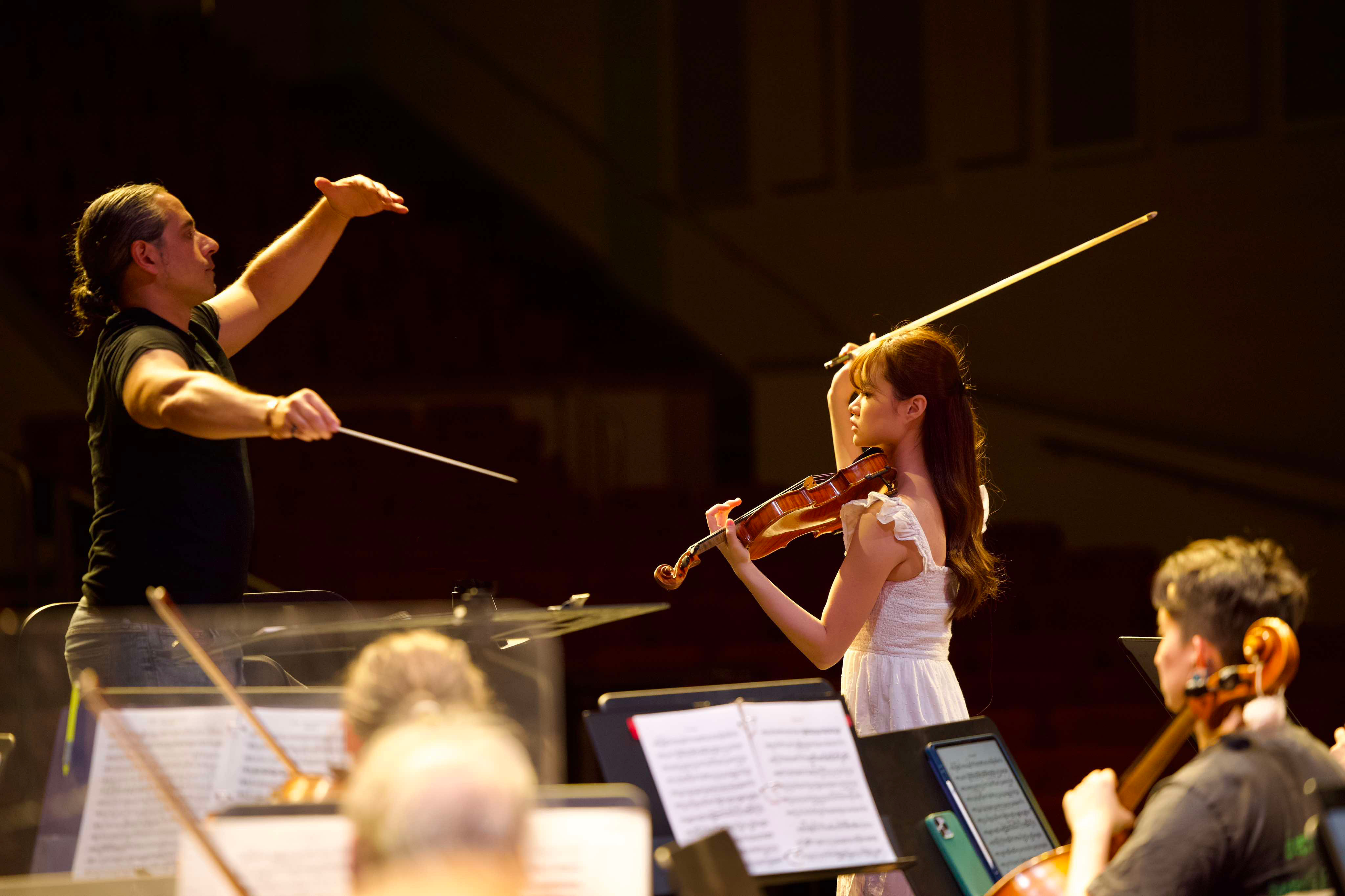
Catherine Lin rehearsing Brahms with Maestro Baldini and the Camellia Symphony Orchestra


Catherine Shin-Rou Lin, 21, was born and raised in Taiwan. She started playing violin when she was four and now she is currently an undergraduate student at the San Francisco Conservatory of Music, studying with Professor Chen Zhao.
Catherine has participated in several music festivals, including the Beverly Hills Music Festival, where she played for many professors such as Oleh Krysa, Margaret Batjer, and Tamara Chernyak. She also attended the Round Top Music Festival and the Bowdoin Music Festival these past few years. Additionally, Catherine has taken private lessons with renowned violinists such as Ilya Kaler, Nai-Yuan Hu, Keng-Yuen Tseng, Nancy Zhou, and Danny Tzu-Ti Chang.
In addition to her festival experiences, Catherine had a great time with the San Francisco Symphony Youth Orchestra in 2022, receiving excellent guidance from SF Symphony’s members and conductors.


Monday, March 11, 2024

Suni Norman in Conversation with Christian Baldini

On March 17, I will have the pleasure of conducting Sibelius' Violin Concerto with Suni Norman with the Camellia Symphony Orchestra in Sacramento, as part of our "Rising Stars" concert series. On the same program we will also feature Salomé Ospina playing the Grieg Piano Concerto. Below is an interview with Suni:

Christian Baldini: Welcome, Suni. I am delighted to feature you as our soloist with our orchestra. Tell me, what are some of the features of the Sibelius Concerto that you enjoy the most? What would you say to someone who does not know this piece, what should they listen for?

Suni Norman: Sibelius Violin Concerto is one of my favorite concerti — this concerto has the perfect amount of soaring melodies and virtuosic passages. Sibelius wanted to be a professional violinist, but due to starting at a late age he was never good enough to fulfill his dream of joining the Vienna Philharmonic. This piece encompasses Sibelius’s failed dream to become a professional violinist. He includes virtuosic techniques from Paganini and Wieniawski, and some Bach-like material can even be heard throughout.

CB: Besides the Sibelius Concerto, what are some of your other favorite pieces, and why?

SN: My favorite pieces are always changing, but right now I love listening to Mozart! I love listening to Mitsuko Uchida’s Mozart Piano Concertos. Mozart’s music is very bright and happy — at the end of the day it gives my brain a break from all the music I’m playing.

CB: You were born in Utah, and you have studied with wonderful teachers, and have been a laureate of important competitions including the Stradivarius one. How did it all start for you with music? Who have been your most important mentors?

SN: I had a computer game when I was 3 years old called JumpStart Toddlers. In the game there was an interactive orchestra and if you clicked on the instruments they would play a song. The violin played the beginning of “Spring” from Vivaldi’s Four Seasons and I thought it was the coolest thing (probably because it was one of the only tunes I recognized). I ended up starting years later, and decided it was what I ultimately wanted to have a career in. My most important mentors have been my violin teachers Soovin Kim and Chen Zhao.

CB: You are a supernumerary with both the San Francisco Symphony and the Utah Symphony. What can you tell us about playing with these two wonderful orchestras? Do you have some specific favorite projects with them and different conductors that you could share with us?

SN: One of my favorite performances was Mahler 6 with Michael Tilson Thomas and the San Francisco Symphony. It was inspiring to play with a conductor and ensemble who know the Mahler symphonies like the back of their hand.

CB: What is your advice for young musicians? How do you best deal with challenges, frustration and adversity?

SN: My advice for young musicians is to take it slow and relax. Enjoy the process and know progress isn’t always a steady slope up. Sometimes we need bad days to appreciate when we sound good!

CB: Thank you for your time Suni, and I look forward to making music with you in Sacramento!

SN: Thanks Maestro, looking forward to a fun Sibelius Concerto!


Suni Norman is an accomplished violinist from Tooele, Utah. She is a laureate of multiple violin competitions including the Stradivarius Competition. She holds a Bachelor’s degree from New England Conservatory and an Artist Diploma from San Francisco Conservatory. Norman has participated in festivals such as New York String Orchestra, Music Academy of the West, Colorado College Festival, Heifetz and Kneisel Hall. 


Norman has appeared as a soloist and chamber musician across the United States. Notably, she has recently collaborated with eminent musicians including Ben Beilman, Robert Mcdonald, Marcy Rosen, Shai Wosner, as well as quartets such as Borromeo, Miro, Takács and Fry Street. 


Suni Norman is currently a supernumerary for San Francisco and Utah Symphony orchestras. She is also featured on an episode of PBS’s Now Hear This (Copland: Dean of American Music). 

Wednesday, February 7, 2024

Dagenais Smiley and Susan Lamb Cook in Conversation with Christian Baldini


On February 17, 2024, I will have the pleasure of collaborating with violinist Dagenais Smiley and cellist Susan Lamb Cook bringing to life together the beautiful Concerto for Violin, Cello and Orchestra by Brahms. This will be in Sacramento with the Camellia Symphony Orchestra. After intermission, we will perform  Bruckner’s 5th Symphony. Here is a conversation we had with Susan and Dagenais, in preparation for our performance.


Christian Baldini: Welcome, Susan and Dagenais, it will be a real treat to do this double concerto with you. Please tell me, what are some of your favorite features about this piece? Why is this such an important piece in the repertoire, and what do you love about it?


Susan Lamb Cook:  I have always been a fan of the music of Brahms and have studied and performed much of his chamber music repertoire, from the wonderful cello sonatas, to his string quartets, quintets, sextets, piano trios, quartets – the list goes on.  So, having the opportunity to perform the Double Concerto is truly a highlight for me, especially with my dear friend and colleague Dagenais Smiley as well as with you, Christian, and the Camellia Symphony Orchestra.  So often, concertos begin with a long orchestral introduction but in this case, Brahms launches immediately into a cello cadenza, similar to the opening of the Elgar Concerto which I had the pleasure of performing with you and the CSO last season.  In Brahms’ opening cadenza, he soon has the violin join in, creating a conversation between the two instruments which gives a preview of what is yet to come.  The Brahms Double is an expansive work containing technical and musical challenges not only for the soloists but for the orchestra as well.  This was Brahms’ final symphonic composition, and one can hear the luscious textures which Brahms is so famous for throughout this monumental work.


Dagenais Smiley: As a violinist, I always love playing the works of Brahms, from the symphonies to the string quartets, and his violin concerto is one of my favorites. He always writes incredible melodies, and intense textures, which is thrilling to perform.  I haven’t had the pleasure of working on the Double Concerto before now and it’s been an incredibly rewarding undertaking.  It’s a unique experience to share a concerto with another instrument, especially the rich voice of the cello, and as Susan already mentioned, it’s like having a conversation with a colleague.  It is technically demanding while still presenting beautiful, soaring melodies.  It’s interesting to note  that it wasn’t immediately a hit upon its presentation, but it has now become a favorite amongst both cellists and violinists.  I am extremely excited to be performing this work with Susan and with you, Christian, and the Camellia Symphony!


Christian: As you know, composers (and especially followers in their circles) had rivalries, and this was also the case between Brahms and Bruckner. Constantin Floros states that “In the last third of the 19th century Brahms and Bruckner were regarded as antipodes.” For different reasons, this was also the case at times with performers. Brahms and the famous violinist Joachim (for whom the Double Concerto was written, together with cellist Hausman) had had a fallout. Brahms offered this concerto as an olive branch to Joachim. In fact Clara Schumann wrote in her diary that after Joachim, Hausmann, and Brahms had tried out the piece for friends, “The Concerto is a work of reconciliation. Joachim and Brahms have spoken to one another again.” - My long related questions to both of you are: What does music mean to you? Is it possible to alter/affect the human spirit through music? Which kind of atmosphere does it communicate, or which kind of spirit inhabits this particular concerto?


Susan:  The world of music, and specifically the cello, has been a part of my life ever since I can remember, so I feel as though the cello is simply an extension of who I am.  My cello and I spend so much time together – in the practice room, in the teaching studio, on the concert stage – that I really can’t imagine my life not being filled with music and the art of music making.  As to whether or not music can possibly affect the human spirit, my answer would be absolutely, yes.  It is interesting how we each seem to be drawn to different styles or genres of music, composers, artists etc., and sometimes we can all listen to the same piece of music but each has a completely different reaction to it.  Our reactions can include joy, excitement, sadness, despair, but the fact is that we react or respond to the way in which the music touches us emotionally.  I do hope that, through our performance of the Brahms Double, we will be able to stimulate reactions from the audience members, perhaps a feeling of excitement from the powerful opening statements of both the first and last movements, as well as a sense of affection and joy from the gloriously optimistic melody of the second movement.  This monumental work leaves me breathless, so I hope it will do the same for our audience members.


Dagenais:  My relationship with my violin and with music is much like a relationship/friendship with a fellow person.  Sometimes it’s filled with joy and humor, sometimes sadness and even a bit of frustration, but it’s always there and as Susan has already stated, I can’t imagine a life without playing music. I had the opportunity to play Mahler 4 recently and during some of the rests, I looked out into the audience and saw how rapt the audience was, and some attendees were even in tears, so yes, I do believe that music has the ability to affect our spirit.  I have favorite pieces I gravitate towards when I’m in a certain mood, as I’m sure we all do, and part of why I love performing (any type of music), is the connection with the audience.  It’s very rewarding to bring the joy, beauty, emotion, sadness, etc. of music to new people.  I’ve talked to some who have never attended a concert before and they were so excited and moved by what the music made them feel.  I look forward to sharing this great piece with the audience and I also look forward to hearing the Bruckner!

Christian: You are both wonderful educators, and colleagues of mine at the University of California, Davis. What are some of your favorite things about working with young people and helping them grow as musicians and human beings?

Susan:  Teaching brings me great joy - I really love working with my UC Davis students as well as my adult and my pre-college students.  Many of my students at UC Davis have chosen fields of study other than music, like animal sciences, engineering, environmental science, etc., but they truly love and value their connection to music through their cello. I am pleased and honored to assist them in becoming better players so that they will have the life-long ability to continue expressing their passion for music through their cello playing.  I continue working with pre-college students through my Rising Stars of Chamber Music Program which takes place each year over the winter holiday.  The students in this program are advanced players who are passionate about chamber music and are totally committed to their music making,  As these students study some of the great works in the chamber music repertoire, I can see them develop as musicians through their understanding of musical lines and phrases, and more importantly, I can see them develop and use tools of cooperation and collaboration while working with their group members, which ultimately allows for wonderful friendships to be formed.  This is one of the greatest benefits of being a musician. 


Dagenais: As Susan mentioned, many of the students we have are majoring in other challenging disciplines yet they want to maintain that connection to music and their instruments.I help them with time management and give them suggestions on how to practice efficiently with limited time and I love seeing the excitement in my students’ eyes when they realize how much progress they’ve made over the quarter.  I am very proud of my students when they are able to master a new technique or play a piece they never thought they would be able to before through their hard work and diligence.  It’s rewarding seeing how important music is to them despite how busy they are in their other fields and I am grateful to have the opportunity to work with them on their musical journey.

Christian: Lastly, what would be your advice for young musicians? We have all felt challenges in life. Most people have thought about quitting, multiple times in many cases. What advice would you give to someone who is struggling with their musical development?

Susan:  There is no doubt that succeeding in music takes a great deal of time, effort, and commitment, and I can certainly remember that, when I was younger, there were periods of time in which I simply wanted to give up.  I was fortunate, though, to have had wonderful teachers along the way, not to mention my parents who were always encouraging me to continue practicing and not be discouraged if things did not always go as I had hoped (in performances, competitions, etc.).  As musicians, we are always putting ourselves on the line, baring our souls to the listener and opening up an often intimate and very personal part of ourselves. Not an easy thing to do.  I always tell my students, though, that every performance is a dress rehearsal for the next performance, with the thought that we are always practicing, doing our best to improve and, of course, always striving for the perfection that we may never achieve.  Some great advice that I received early on was to surround myself with those who were better than me so that I could always continue learning.  This advice has served me well, not only in the area of music. 


Dagenais:  My approach to teaching is to be encouraging, but also realistic and understanding.  One of my students was struggling with the motivation to practice,  so we had a chat about it and I acknowledged that student’s feelings (we’ve all been through that struggle in our life) and gave them some advice on how to move forward. I think it’s important to recognize when something is a struggle and to accept and acknowledge those feelings rather than try to erase them. I try to teach my students to have patience with themselves (something that I struggled with in school). It’s ok to take a day off practice when you’re in a negative head space and return the next day feeling refreshed and excited to begin again. It’s easy to get stuck in the cycle of trying to achieve perfection and the rat race of gigging so much that we can sometimes get frustrated and lose the joy of performing. It’s important to take the time to remember what music means to us. Sometimes it can be a wonderful change to attend a concert rather than performing in one to remember how powerful it can be to experience live music.

Christian: Thank you both very much for your time, and especially for your wonderful musicianship that I will be delighted to share with our audience in Sacramento!


Dagenais Smiley, a Northern California native, earned  her bachelor’s degree from the Oberlin Conservatory  under the direction of Milan Vitek and her masterof music from the USC’s  Thornton School of Music, studying with Ms. Kathleen Winkler. An active orchestral and chamber musician, Dagenais performs with the Sacramento Philharmonic and Opera, and is currently acting Associate Concertmaster with the Modesto Symphony, often stepping in as Concertmaster. She recently became Assistant Concertmaster of the Reno Philharmonic and also performs with the Stockton Symphony, the Monterey Symphony, the Fresno Philharmonic, and other various Northern California  orchestras. Ms. Smiley currently teaches violin at UC Davis and maintains a private violin studio. She enjoys skiing, hiking and playing Pokemon Go in her spare time.


Monday, October 30, 2023

Eric Zivian in Conversation with Christian Baldini

On November 4, I will have the pleasure of collaborating with pianist Eric Zivian as our soloist in Beethoven's Piano Concerto No. 4 with the Camellia Symphony Orchestra in Sacramento. Also on the program (aptly titled "Revolutionary Spirits") will be Beethoven's Symphony No. 2, as well as Ruth Crawford Seeger's Andante for Strings. Below is a conversation with Eric.


Christian Baldini: Eric, once more it will be a pleasure to work with you and to make music together. What are some of the things you like the most about this Beethoven Concerto? And what should people listen for in it?


Eric Zivian: It’s wonderful to be back working with you again! The Beethoven Fourth Piano Concerto is a very special piece in the repertoire. It is not stormy or extroverted like Beethoven’s other concertos, but predominantly gentle and lyrical. The slow movement, a dramatic dialogue between the orchestra and piano, is absolutely stunning. In the first movement, Beethoven breaks the usual pattern of concerto first movements and opens with a rhapsodic piano solo before the standard orchestral introduction. I find the ornaments in the piano part toward the end of the movement, after the cadenza, to be some of the most delightful ever written.


CB: Does your interpretation change much as rehearsals go forward? Aside from practicalities, do you feel that rehearsing with others and in different spaces affect your performance or your understanding of a piece? 


EZ: Absolutely. There is nothing like rehearsing with a full orchestra under the direction of an intelligent and sensitive musician like you to give me a fresh perspective. Plus, during practice I always think of new things!


CB: Well thank you, it is truly a wonderful collaboration working with you and receiving so much feedback from you in rehearsals! You also play a lot on the fortepiano. Has this informed how you approach a Beethoven or Mozart Concerto when performing on a modern instrument?


EZ: Very much so. I have a fortepiano modeled on the kind of instrument Mozart and Beethoven would have known. It has a totally different touch and sound, very articulate in all registers with deep bass notes, bringing out the clarity of the counterpoint. With that sound in my ear, I have learned to emphasize those qualities on the modern piano when playing 18th and 19th-century music.


CB: You also love the music of Brahms, and of Ligeti. What attracts you so much to their music, and why?


EZ: Although Brahms and Ligeti were very different composers, I love their music for much the same reason: they use complex rhythms that appeal to my sensibility, while at the same emphasizing clarity and directness of expression.


CB: As a composer, what are some of your priorities, and/or what do you try to achieve with your own music?


EZ: To be fully transparent, I haven’t written music in some years. But in my composing days, I also aimed to write music that reflected a combination of rhythmic intricacy and straightforward expression. Decades of composing music also helps me, as a performer, to gain insight into the composer’s perspective.


CB: What would be your advice for young pianists and for young composers? What is your advice when people lose hope or get frustrated with themselves?


EZ: My advice is: always remember what drew you to performing or composing. By all means listen to the valuable advice of your teachers and mentors, but stay true to your own vision of what music is all about. During performance, or the creative process, relax and let the music flow through you.


CB: Thank you Eric, I am very much looking forward to our performance together!


EZ: Thanks Christian, I can’t wait!


ERIC ZIVIAN

 Eric Zivian received music degrees from the Curtis Institute of Music, the Juilliard School and the Yale School of Music. He studied piano with Gary Graffman and Peter Serkin and composition with Ned Rorem, Jacob Druckman, and Martin Bresnick.

Eric is equally at home on modern and period instruments. He is Music Director of the Valley of the Moon Music Festival, a festival in Sonoma specializing in Classical and Romantic chamber music played on period instruments, and a longtime member of the Left Coast Chamber Ensemble in San Francisco.

Eric recently performed the Mozart C minor Concerto with the Portland Baroque Orchestra and the Beethoven Choral Fantasy with the Philharmonia Baroque Orchestra. At the height of the pandemic, Eric livestreamed all 32 Beethoven piano sonatas on period pianos.


Monday, September 18, 2023

Parker van Ostrand in Conversation with Christian Baldini


On September 23, I will have the pleasure of conducting Prokofiev's Piano Concerto No. 3 with the wonderful young pianist Parker van Ostrand. This will be in Sacramento (California) with the Camellia Symphony Orchestra, in a program that will also feature Brahms' Second Symphony, as well as Midnight Stirring by Nancy Galbraith. Below is an interview with Parker.
 
Christian Baldini: Dear Parker, it is a pleasure to welcome you again in your native Sacramento to feature you as our soloist in Prokofiev's 3rd Piano Concerto with the Camellia Symphony Orchestra. Tell us, how does it feel to come back home and be featured as our soloist?


Parker van Ostrand: I’m really excited. Playing with orchestra is one of my favorite things as a musician, and getting to do it with a great orchestra and conductor makes it even better. And this will be the first time I play Prokofiev 3 with orchestra. It's also nostalgic since I’m performing again at my old high school. The first rehearsal was the first time I went back there since graduating more than two years ago!

CB: The first (and last) time we featured you as our soloist it was within our Rising Stars series, and you played Beethoven's 2nd Piano Concerto. This was four years ago, and you have amassed a number of successes since then, including winning prizes at major international competitions, performing together with Yuja Wang in San Francisco, being named a 2021 U.S. Presidential Scholar in the Arts. How do you feel? What has changed for you?

PvO: I feel really grateful for all the opportunities I’ve had in the last couple years. Playing with Yuja was definitely a highlight because I’ve looked up to her more than almost any other pianist ever since I was a kid. One thing that’s changed with all this experience is I feel more open to being spontaneous on stage. I’m more confident in my musical decisions and style of playing, so I’m able to take more risks and see what ideas I can come up with on the spot. When you let loose and don’t worry so much about being perfect or how other people might judge your playing, performing becomes a lot more fun.

CB: Tell us about Prokofiev, and his Third Piano Concerto. What are some of the things you like the most about this piece, and what should people listen for when you perform it?

PvO: Prokofiev 3 is one of my favorite concertos to play- it’s naughty, sarcastic, even grotesque at times. I love playing this piece because it’s really fun to go all out with making the piece as “rude” and brash as possible. The writing is very virtuosic and even acrobatic at times, so it’s pretty cool to watch from the audience standpoint. Prokofiev himself was rebellious and cocky during his time at conservatory, and this piece perfectly encapsulates that. There’s a lot of conflict between the piano and orchestra parts, and it’s pretty cool to be one person fighting against 100 other people on stage. There’s also moments in the concerto that are nostalgic, smoky, elegant, beautiful–and the fact that these moments are so rare make them even more memorable. Part of the second movement is a variation that has the sounds of a dark, icy Siberian winter. It will give one chills.


CB: When I interviewed you back in 2019, we talked a lot about your practice routine, the meaning of music to you, and also about your goals in life. Have your goals changed? Do you see anything very differently?

PvO: Because so much has happened in the last couple years I could never have expected or planned (musically related), I actually haven’t been one to set specific goals recently. With a career path in music, so much is out of your control except your ability as a musician. So my goal these days is just to be as good as I can be at the piano, and see what happens from there.


CB: Tell us about your education and your main mentors since you finished high school.


PvO: I’ve been at the San Francisco Conservatory of Music since January of 2022, and I’m now working with Garrick Ohlsson and Yoshikazu Nagai. I’ve studied with Garrick since I was 16, and just recently started studying with Yoshikazu Nagai. Knowing Garrick for this long, he’s had a huge impact on me and just been an amazing teacher, mentor, and someone I look up to. I can also say the same about my previous teacher here at the conservatory, Jon Nakamatsu, who I studied with during my first three semesters at SFCM.


CB: Lastly: what are some of the things (anything) that interest you the most outside music?


PvO: I like going to the gym a lot. It’s fun to keep pushing yourself and setting new goals all the time. When I have more time, I love adrenaline activities like riding rollercoasters or jetskis, and also doing challenging hikes. Nowadays, I am also pretty into watching movies, thrillers in particular.


CB: Thank you very much for your time. I look forward to sharing your wonderful artistry with our audience members.


PvO: Thank you! Looking forward.


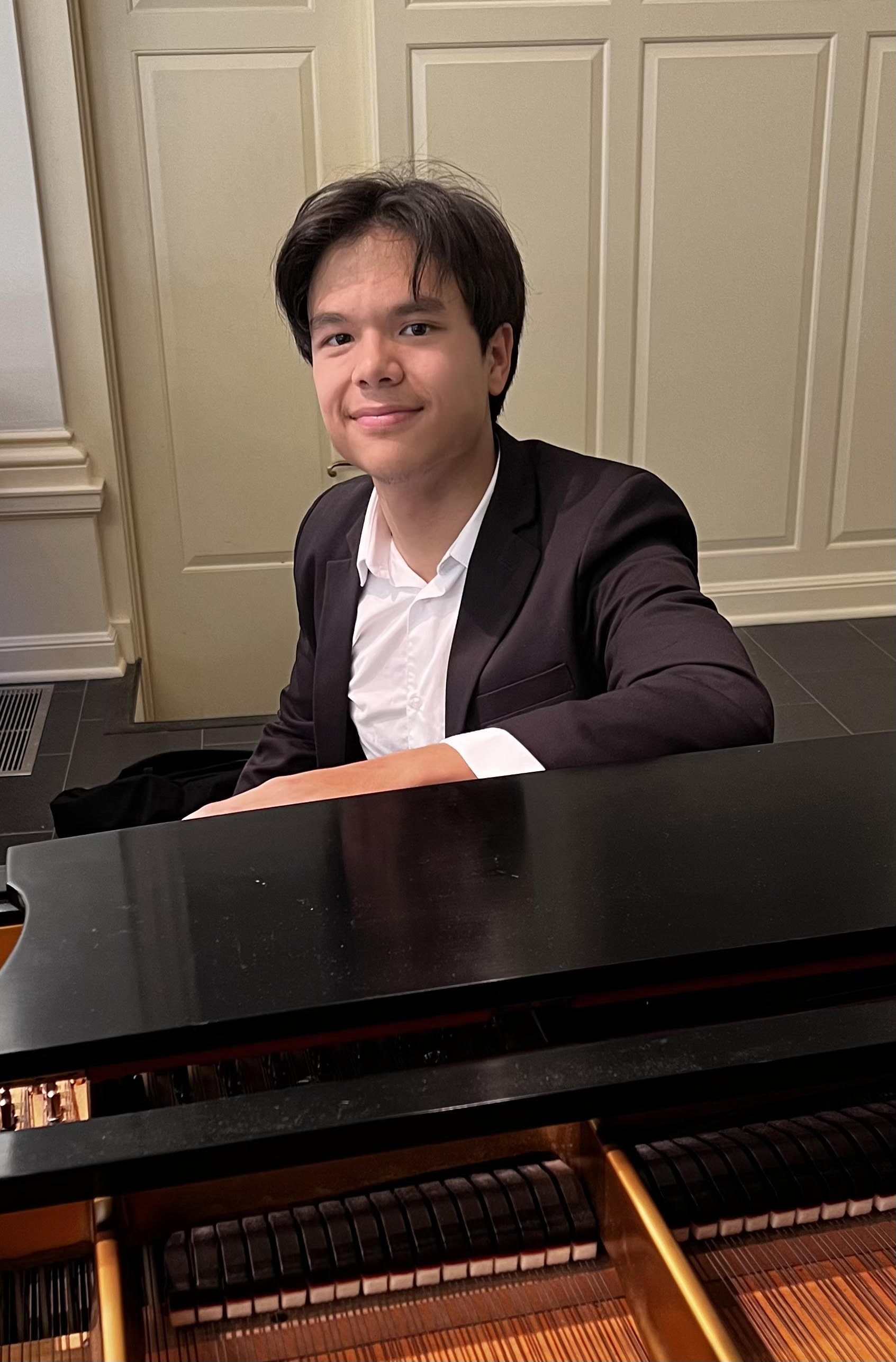
Parker Van Ostrand currently studies at the San Francisco Conservatory of Music with Garrick Ohlsson and Yoshikazu Nagai.

He recently won the 2023 PianoTexas Academy Concerto Competition and performed with the Fort Worth Symphony Orchestra this past June. In 2022, he won the Gold Medal in the 71st Wideman International Piano Competition and in November, collaborated with Yuja Wang for a two-piano performance at the SFCM Gala. Last summer, he was selected to play in the inaugural G. Henle Verlag Murray Perahia Masterclass in Munich. He also toured with the California Youth Symphony to Eastern Europe last summer with Bernstein’s Symphony No. 2, “The Age of Anxiety.” In 2020, Parker won Third Prize and the Best Sonata Award in the 10th National Chopin Piano Competition, and was one of 20 high school students nationwide named a 2021 U.S. Presidential Scholar in the Arts.

This season, Parker will be performing with the Camellia Symphony, Symphony Parnassus, the South Arkansas Symphony, the Shreveport Symphony, and the San Francisco Conservatory of Music orchestra as winner of their 2023 Concerto Competition. He will also give recitals at the Tutunov Series in Ashland, the Cape Cod Chamber Music Festival, the Washington International Piano Festival, and Gretna Music with violinist Amaryn Olmeda.

Parker is from Sacramento, CA, and previously studied with Linda Nakagawa, Natsuki Fukasawa, Sarah Chan, and Jon Nakamatsu.